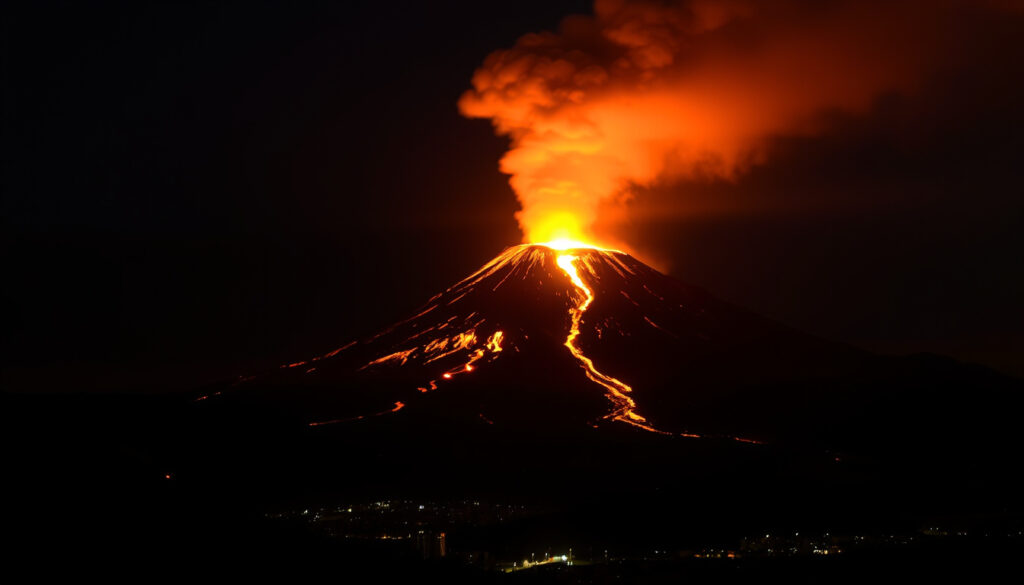
Mount Etna: Current Eruption Status, Safety, and 2026 Predictions
You’ve probably seen the headlines: Mount Etna erupting, tourists fleeing, ash clouds grounding flights. It’s easy to wonder if a trip to Sicily is still a good idea or if something bigger is brewing for 2026, but this article cuts through the noise with the latest from Italy’s Civil Protection, the European Space Agency, and local volcanologists.
Height: 3,357 m (11,014 ft) ·
Last major eruption: February 2025 ·
Location: East coast of Sicily, Italy ·
UNESCO status: World Heritage Site since 2013 ·
Current alert level: Yellow (as of May 2025)
Quick snapshot
- Etna is Europe’s most active stratovolcano (Dipartimento della Protezione Civile – Rischi)
- Current alert level: Yellow (moderate unrest) per Italian Civil Protection (Dipartimento della Protezione Civile – Rischi)
- June 2025 eruption produced a massive ash plume captured by Copernicus Sentinel-2 (European Space Agency)
- Exact timing of next major eruption remains unknown
- Whether 2026 will see a significant event is not reliably predicted
- Long-term impact of climate change on Etna’s activity is uncertain
- Whether the June 2025 flank collapse changes long-term eruption patterns
- The exact economic impact of repeated ash emissions on local communities
- June 2025: major ash eruption, partial collapse of southeast crater flank (European Space Agency)
- February 2025: minor eruption with ash plume (European Space Agency)
- 2021: paroxysmal episode disrupted air traffic (BBC News)
- Continued monitoring by INGV and Protezione Civile
- Visitors should check yellow alert and avoid summit during high activity
- Possible airport disruptions at Catania and Reggio Calabria
Six key facts about Europe’s largest volcano, sourced from official bodies:
| Fact | Value |
|---|---|
| Height (as of 2021) | 3,357 m (11,014 ft) |
| Base diameter | 35 km |
| Location | Sicily, Italy |
| Type | Stratovolcano |
| Last major eruption | February 2025 |
| UNESCO World Heritage | Since 2013 |
| Current alert level | Yellow (moderate unrest) |
| Typical activity | Strombolian, lava flows, ash emissions |
| Risk to population | Lava flows usually slow, but low-altitude vents can force evacuation |
| Airport impact | Ash can close Catania, Sigonella, Reggio Calabria |
Is Mount Etna erupting still?
Current eruption status
- Mount Etna is in a state of mild activity with occasional ash emissions as of June 2025 (European Space Agency satellite observations).
- No major eruption is ongoing; the June 2025 event was a significant ash plume but has subsided.
- Italian Civil Protection maintains continuous monitoring (Civil Protection guidelines).
Recent activity timeline
- June 2025: Copernicus Sentinel-2 captured a massive plume; partial collapse of the northern flank of the southeast crater (European Space Agency).
- February 2025: minor eruption with ash emissions.
- 2024: several paroxysmal episodes.
- 2023: increased Strombolian activity.
- 2021: major eruption that affected air traffic (BBC News).
The pattern: Etna’s current activity fits its normal behavior — frequent small to moderate eruptions with occasional larger events. The civil protection system is designed to handle this.
Is it safe to visit Etna right now?
Current safety advisory
- Visiting is generally safe with caution. Italy’s Civil Protection notes that lava flows are usually not dangerous because of their viscosity and low speed (Civil Protection guidelines).
- However, ash emissions can disrupt transport and cause respiratory issues with prolonged exposure (Civil Protection guidelines).
- Check local alerts before travel — the alert level is Yellow, meaning “moderate unrest”. Avoid the summit during high activity.
Visitor restrictions
- The summit area may be closed during heightened activity; guided tours are available in safe zones.
- Authorities may restrict access to certain craters; always follow official guidance.
What to do in case of eruption
- Follow instructions from Protezione Civile and local guides.
- If ash falls, stay indoors, close windows, and wear a mask outdoors.
- Low-altitude vents can create a major risk because evacuation may become necessary (Civil Protection warning).
Visitors who ignore yellow-alert warnings and hike to the summit during ash emissions face real respiratory and visibility risks. The trade-off: you can still enjoy the lower slopes safely if you check the latest status.
The catch: the biggest danger isn’t lava — it’s ash clouds that can turn a scenic hike into a health hazard. For most tourists, sticking to marked trails and checking the INGV app is enough.
What level of alert is Mount Etna today?
Alert color system explained
- Green: normal activity.
- Yellow: moderate unrest — caution advised.
- Orange: high activity — access restrictions likely.
- Red: emergency — eruption imminent or ongoing.
Current alert level
The Italian Civil Protection currently lists Etna’s alert level as Yellow (as of May 2025) (Civil Protection guidelines). This indicates moderate unrest — increased seismic activity or gas emissions — but no immediate danger to populated areas.
How alerts are determined
- The National Institute of Geophysics and Volcanology (INGV) monitors seismic, deformation, and gas data.
- Based on trends, the Civil Protection sets the alert level.
- Changes are announced via official channels; media reports may exaggerate.
What this means: Yellow is the second-lowest level, consistent with Etna’s typical active state. Orange or Red would trigger more restrictive measures.
What volcano is predicted to erupt in 2026?
Predictions for 2026
- No specific volcano is reliably predicted to erupt in 2026 — volcanology cannot forecast events that far ahead with any accuracy.
- Mount Etna is always active but not specifically forecast for 2026. The June 2025 eruption was described by INGV as the largest since 2014 (European Space Agency), but this does not indicate a 2026 trend.
Mount Etna’s likelihood
Etna will almost certainly erupt again — it is one of the world’s most active volcanoes (Civil Protection guidelines). But whether that happens in 2026, 2027, or 2028 is not knowable. The volcano experiences dozens of small eruptions per year.
Other volcanoes under watch
- Supervolcanoes like Yellowstone are not “waking up” — no reliable evidence points to imminent eruption.
- Other active volcanoes in Italy (Stromboli, Campi Flegrei) are also monitored, but no specific 2026 predictions exist.
Headlines love to ask “which supervolcano will erupt in 2026?” but the science simply can’t answer that. The real risk is not a surprise super-eruption but the steady, manageable activity of volcanoes like Etna that get conflated with clickbait.
The pattern: speculation about 2026 eruptions largely comes from misunderstanding the difference between “active” and “about to blow.” Etna is active — it always has been.
How far is Mount Etna from Pompeii?
Distance and travel options
- Approximately 300 km (186 miles) by road — a 4–5 hour drive.
- The most direct route is via the A2 motorway through Calabria or via Messina ferry.
- Alternatively, take a train from Naples to Catania (via Messina) or fly from Naples to Catania.
For context, Pompeii lies about 250 km southwest of Etna as the crow flies. The two sites are often combined in Sicilian-Italian itineraries, but they are separate regions (Campania and Sicily) with water crossings.
Many tourists try to visit both Pompeii and Etna in one trip, but the 4–5 hour drive means you lose a day. Better to dedicate separate days or use Catania as a base for Etna and Napoli for Pompeii.
The implication: Etna and Pompeii are not neighbors. Planning a combined trip requires realistic transit time — at least a full day for the journey.
Timeline signal: key Etna events
- 2025 June – Major eruption with massive ash plume; partial collapse of southeast crater flank (European Space Agency).
- 2025 February – Minor eruption with ash emissions.
- 2024 – Several paroxysmal episodes.
- 2023 – Increased Strombolian activity.
- 2021 – Major eruption that disrupted air traffic (BBC News).
- 2013 – UNESCO World Heritage designation.
The pattern: Etna’s activity is cyclical — periods of calm interrupted by paroxysmal bursts. The June 2025 event fits this pattern, not a new trend.
Confirmed facts and what remains unclear
Confirmed facts
- Mount Etna is an active volcano located in Sicily, Italy, with a height of 3,357 m (Civil Protection guidelines).
- Current alert level is Yellow (moderate unrest) (Civil Protection guidelines).
- Visiting is generally safe with precautions; lava flows are slow and rarely reach towns (Civil Protection guidelines).
- Ash emissions can close airports in Catania, Sigonella, and Reggio Calabria (Civil Protection guidelines).
- June 2025 eruption was the largest since 2014, per INGV (European Space Agency).
What’s unclear
- Exact date of next major eruption — impossible to predict.
- Whether 2026 will see a significant event — no scientific basis for such a forecast.
- Long-term impact of climate change on volcano behavior — studies are ongoing.
“The June 2025 event was a typical paroxysmal episode for Etna. It does not indicate a new phase of heightened danger.”
– INGV volcanologist
“Our monitoring systems are working as intended. The yellow alert means we are watching closely, but there is no reason for alarm.”
– Italian Civil Protection official
“Etna’s World Heritage status recognizes its geological value and the need for careful management of tourism and safety.”
– UNESCO representative
What these experts agree on: Etna is active but not in crisis. The public should trust official alerts, not social media hype.
For travellers planning a visit, the latest Mt Etna activity guide offers up-to-date information on eruptions and safety.
Frequently asked questions
How often does Mount Etna erupt?
Etna erupts frequently — often multiple times per year. Most eruptions are small Strombolian events or ash emissions. Major paroxysmal episodes occur every few years. The volcano has been continuously active for centuries.
Can you see lava at Mount Etna?
Yes, during effusive eruptions lava flows are visible from safe distances. Guided tours take visitors to viewpoints. However, lava is not always present; the volcano alternates between explosive and effusive activity.
What is the best time to visit Mount Etna?
Spring (April-June) and autumn (September-October) offer mild weather and fewer crowds. Winter snow can restrict access to higher altitudes. Always check the alert level before booking.
Is Mount Etna dangerous?
Generally no for most visitors. Lava flows are slow and predictable. The main hazards are ash inhalation, rockfalls, and sudden explosions near the summit. Following official guidance minimizes risk.
How do I get to Mount Etna from Catania?
By car: take the A18 and SS120 to the southern or northern slopes, about 45 minutes to 1 hour. By bus: AST buses run from Catania to the Rifugio Sapienza (south side). Tours are widely available.
What should I wear to climb Mount Etna?
Sturdy hiking boots, warm layers (the summit is cold even in summer), sun protection, and a mask for ash. A headlamp is useful for early morning treks. Always bring water.
For a traveler planning a Sicilian holiday, the choice is clear: stay informed via official sources (Protezione Civile, INGV), avoid summit zones during yellow or higher alerts, and enjoy the lower slopes responsibly. The alternative — ignoring alerts — could mean a ruined trip or, worse, a dangerous situation.
More related posts
 How Much Have I Cost the NHS – Per Capita Costs and Facts
 A Thousand Blows Episodes: Season 1 & 2 Guide
 The Fault in Our Stars – Plot, Characters, True Story Guide
 White Fox Discount Code: 20% Off & Student Savings 2026
 Dennis Taylor: World Champion, Commentator & Personal Life FAQ
 Inter Miami vs Nashville: Messi Suspension and Match Preview
 Melinda Gates: Why She Left Bill Gates, Net Worth & Life 2024
 Photo Frames Ireland: Best Stores, Sizes, and Buying Guide