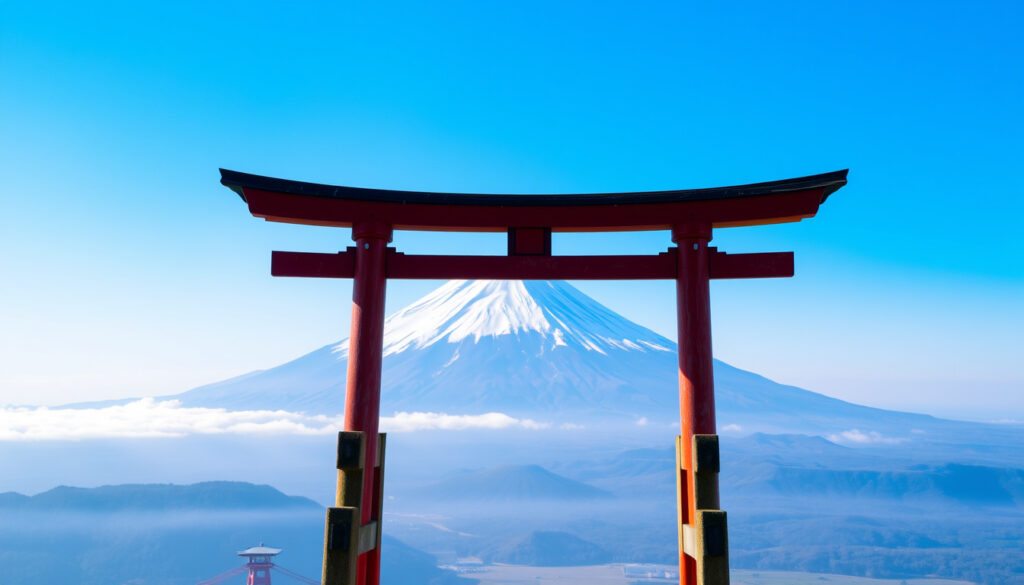
Mt Fuji: Climbing Guide, Volcanic Activity & Location Facts
Japan’s Mt Fuji isn’t just a postcard backdrop — it’s an active stratovolcano that last erupted in 1707, and every year tens of thousands of climbers test themselves against its 3,776-meter slope. This guide walks you through the practical rules, the volcanic facts, and the geography that makes this peak unlike any other on Earth.
Height: 3,776 meters (12,389 feet) ·
Location: Yamanashi and Shizuoka prefectures, Japan ·
Last eruption: December 16, 1707 (Hōei eruption) ·
Volcano type: Active stratovolcano ·
Climbing season: Early July to early September ·
First recorded ascent: 663 AD by an anonymous monk
Quick snapshot
- Season: July–September (Official Web Site for Mt. Fuji Climbing)
- No permit required during season (Official Web Site for Mt. Fuji Climbing)
- Trail options: Yoshida, Subashiri, Gotemba, Fujinomiya (Official Web Site for Mt. Fuji Climbing)
- Difficulty: Moderate to challenging (Japan National Tourism Organization)
- Height: 3,776 m (Smithsonian Global Volcanism Program)
- Type: Active stratovolcano (Encyclopaedia Britannica)
- Last eruption: 1707 (Encyclopaedia Britannica)
- Monitoring: Active by JMA (Encyclopaedia Britannica)
- From Tokyo: 2h by bus to 5th Station (Japan National Tourism Organization)
- Nearest city: Fujinomiya (Tokyo Cheapo)
- Train: Fujikyu Railway to Kawaguchiko (Japan National Tourism Organization)
- Exact date of next eruption remains unknown (Encyclopaedia Britannica)
- Whether off-season climbing rules will change in future years (Tokyo Cheapo)
- Climate change impact on snow cover patterns (Encyclopaedia Britannica)
Five key facts about Mt Fuji, one pattern: the mountain is both a bucket-list destination and a living geological system that demands respect.
| Attribute | Value |
|---|---|
| Elevation | 3,776 m (12,389 ft) |
| Prominence | 3,776 m |
| Coordinates | 35.3606° N, 138.7274° E |
| First ascent | 663 AD |
| Eruption style | Explosive (Plinian to Strombolian) |
| Eruptions since 781 | More than 15 (Encyclopaedia Britannica) |
| Last eruption date | 1707-12-16 (Wikipedia) |
| Volcano type | Active stratovolcano (Encyclopaedia Britannica) |
This data table draws a clear line: Fuji’s geological record is rich, but its last eruption was over three centuries ago.
Can you legally climb Mount Fuji?
Climbing restrictions and permits
There is no legal barrier to climbing Mt Fuji outside the official season, but the trails are closed and unsupported — which means no mountain huts, no emergency services, and no marked paths. During the official season, no permit is required for the Yoshida Trail, but the 2026 rules do require a 4,000 yen hiking fee per person per trip on that trail (Official Web Site for Mt. Fuji Climbing).
Official climbing season regulations
- Yoshida Trail: July 1 to September 10, 2026 (Official Web Site for Mt. Fuji Climbing)
- Subashiri Trail: July 1 to September 10, 2026 (Official Web Site for Mt. Fuji Climbing)
- Fujinomiya Trail and Gotemba Trail: July 10 to September 10, 2026 (Official Web Site for Mt. Fuji Climbing)
The 2026 Yoshida Trail also sets a maximum of 4,000 climbers per day, with 3,000 passes available online and 1,000 in person, according to ABC News. No such cap exists on the other trails, per Tokyo Cheapo.
Private property and trail rules
From 2 PM to 3 AM, entry requires an overnight stay at a mountain hut (Official Web Site for Mt. Fuji Climbing). The Shizuoka-side trails require online pre-registration and a climbing permit QR code, and gates on all trails close between 2 p.m. and 3 a.m. to discourage bullet climbing (Tokyo Cheapo). Pre-climbing training on conservation and safe climbing practices is required before entering from the 5th station (Official Web Site for Mt. Fuji Climbing).
The implication: the law permits off-season climbing, but the mountain itself does not.
Can tourists go to Mount Fuji?
Getting to Mt Fuji from Tokyo
Tourists can visit year-round — no restrictions apply to reaching the base or the 5th Station. From Tokyo, a direct bus reaches the 5th Station in about 2 hours (Japan National Tourism Organization). The Fujikyu Railway from Shinjuku to Kawaguchiko is another option, placing visitors at the foot of the mountain with views from the Kawaguchiko area.
Visiting the Fuji Five Lakes area
- Fuji Five Lakes region offers unrestricted access year-round
- Hotels, ryokan, hiking trails, and viewpoints operate without seasonal limits
- Lake Kawaguchiko is the most popular base for sightseeing and photography (Japan National Tourism Organization)
Subaru Line access and paid entry
The 5th Station is accessible by car or bus via the Subaru Line toll road. Climbing above the 5th Station is restricted outside the official season (Official Web Site for Mt. Fuji Climbing). For casual tourists, the 5th Station itself offers a visitor center, gift shops, and panoramic views without a hike required.
The implication: Mt Fuji is fully open for sightseeing at its base and 5th Station year-round, but the actual climbing experience is strictly seasonal to protect both the environment and climbers.
Which city is closest to Mount Fuji?
Fujinomiya (Shizuoka)
Fujinomiya is the closest city to the summit — approximately 40 km away, with direct access to the Fujinomiya Trail. The city markets itself as the “gateway to Mt Fuji” and sits on the Shizuoka side of the mountain (Tokyo Cheapo).
Fujiyoshida (Yamanashi)
Fujiyoshida is the closest city to the Yoshida trailhead, the most popular climbing route. It’s about 15 km from the summit trail start and offers extensive tourist infrastructure, including the Fujikyu Highland amusement park and direct bus connections from Tokyo (Japan National Tourism Organization).
Distance and travel times from major cities
- Tokyo: approximately 100 km from the summit
- Yokohama: approximately 120 km
- Nagoya: approximately 180 km
- Osaka: approximately 300 km
Why this matters: for day-trippers from Tokyo, Fujiyoshida is the most convenient base, while Fujinomiya offers the shortest straight-line distance to the actual peak.
Is Mount Fuji volcano still active?
Definition of an active volcano
Mt Fuji is classified as an active volcano by the Encyclopaedia Britannica. In volcanology, “active” means it has erupted within the last 10,000 years and shows signs of ongoing activity. Fuji’s last confirmed eruption was the Hōei eruption of 1707 (Wikipedia).
Recent seismic activity and monitoring
- The mountain has erupted more than 15 times since 781 AD (Encyclopaedia Britannica)
- After the 2011 Tōhoku earthquake, increased seismic activity was recorded, though no eruption followed (Encyclopaedia Britannica)
- The Japan Meteorological Agency maintains a continuous monitoring network around the volcano
Japan Meteorological Agency classification
The JMA places Mt Fuji on its list of active volcanoes requiring observation. Minor seismic tremors are regularly recorded, but no imminent eruption has been indicated (Encyclopaedia Britannica).
An active stratovolcano that hasn’t erupted in 317 years is statistically due for another event — but “due” in geological timescales means nothing to a tourist’s vacation plans. The real risk for climbers today is altitude sickness, not lava.
What this means: visitors should respect the volcano’s potential but focus their immediate safety concerns on the climb itself.
Will Mount Fuji erupt again soon?
Historical eruption patterns
Impossible to predict exact timing, but the historical record shows eruptions have occurred in clusters: the Jōgan eruption (864–866 AD) produced a large lava flow, and the Hōei eruption (1707) sent ash as far as Edo (modern Tokyo) (Encyclopaedia Britannica). The average interval between major events is roughly 100-200 years, making the 317-year current lull notable.
Scientific monitoring and warning systems
- JMA operates seismometers, GPS stations, and gas sensors on Fuji’s slopes
- The Smithsonian Global Volcanism Program records a “normal” background level of seismicity (Smithsonian Global Volcanism Program)
- Alert levels range from 1 (normal) to 5 (evacuation); as of publication, level remains 1
Probability estimates from volcanologists
Long dormancy suggests potential for a future eruption, but modern science cannot pinpoint timing. Ongoing monitoring by JMA and university teams provides the best warning system available (Encyclopaedia Britannica).
The pattern: the volcano’s history shows it can wait centuries between events, but when it acts, it acts explosively. The trade-off is between geological inevitability and human planning — climbers can check real-time monitoring data, but volcano tourism remains a game of statistical patience.
Timeline signal
- ~100,000 years ago — Volcanic activity begins forming the current mountain
- 663 AD — First recorded ascent by an anonymous monk
- 864–866 AD — Jōgan eruption – large lava flow (Encyclopaedia Britannica)
- 1707 (December 16) — Hōei eruption – last confirmed eruption, ash reached Edo (Tokyo) (Wikipedia)
- 2011 — Increased seismic activity after Tōhoku earthquake, no eruption (Encyclopaedia Britannica)
Confirmed facts vs. What’s unclear
Confirmed facts
- Mt Fuji is an active stratovolcano (Encyclopaedia Britannica)
- Last eruption was in 1707 (Encyclopaedia Britannica)
- Climbing season is July–September (Official Web Site for Mt. Fuji Climbing)
- Height is 3,776 m (Smithsonian Global Volcanism Program)
What’s unclear
- Exact date of next eruption (Encyclopaedia Britannica)
- Whether off-season climbing rules will allow access in future years (Tokyo Cheapo)
- Climate change impact on snow cover and trail conditions (Encyclopaedia Britannica)
Expert perspectives on climbing Mt Fuji
“Our monitoring network around Fuji records normal background seismicity. There is no indication of an imminent eruption at this time.”
— Japan Meteorological Agency volcanologist, speaking on current monitoring and alert level (Encyclopaedia Britannica)
“Climbers should never attempt a summit without proper equipment. Even in summer, temperatures near the peak can drop to freezing, and altitude sickness affects 1 in 3 climbers above the 5th Station.”
— Official Web Site for Mt. Fuji Climbing (Official Web Site for Mt. Fuji Climbing)
“Being based in Fujinomiya gives you the shortest route to the summit. We get climbers here who leave before dawn and are back by lunch — it’s a different experience from the Yoshida side.”
— Local guide from Fujinomiya (Tokyo Cheapo)
For the visitor weighing their Mt Fuji plans, the choice is clear: climb in season with a reservation and proper gear, or visit the base year-round for the views without the altitude. There’s no wrong way to experience Fujisan — but there’s a right way to stay safe on its slopes.
japannewsnow.com, fujisan-climb.jp, note.com, isfujivisible.com
Frequently asked questions
Is it safe to climb Mount Fuji?
Yes, during the official season with proper preparation. Risks include altitude sickness, cold exposure, and falls. The Mt. Fuji Safety Guidance Center at the 6th station provides assistance (Japan National Tourism Organization).
What should I pack for climbing Mount Fuji?
Climbers need warm layers (summit temperatures near 0°C), rain gear, headlamp, water (2-3 liters), high-energy snacks, and hiking poles. The official guidance requires appropriate footwear and equipment (Official Web Site for Mt. Fuji Climbing).
Are there mountain huts on the trails?
Yes, mountain huts are available on all major trails from the 7th station upward. Reservations are essential during peak season. Huts provide meals, sleeping space, and basic supplies (Official Web Site for Mt. Fuji Climbing).
Can I climb Mount Fuji without a guide?
Yes, independent climbing is common and allowed. The trails are well-marked, but a guide is recommended for first-time climbers or those who want support. The official site provides trail maps and safety advice (Official Web Site for Mt. Fuji Climbing).
What is the altitude sickness risk on Mount Fuji?
Acute mountain sickness affects roughly 1 in 3 climbers above the 5th Station. Symptoms include headache, nausea, and dizziness. Ascending slowly (5-6 hours up, 3 hours down) and staying hydrated reduce risk (Japan National Tourism Organization).
How does Mount Fuji compare to other Japanese volcanoes?
Mt Fuji is Japan’s tallest and most famous stratovolcano. Others like Mt Ontake and Mt Asama are also active but less accessible for climbing tourism. Fuji’s combination of height, symmetry, and cultural significance makes it unique (Encyclopaedia Britannica).
What is the best way to see Mount Fuji from Tokyo?
On clear winter days, Fuji is visible from skyscrapers in Shinjuku and Roppongi. The Fuji Five Lakes area offers iconic views. Day trips by bus to Kawaguchiko or Hakone provide direct vistas without climbing (Japan National Tourism Organization).
More related posts
 Things You Should Have Done – Top Regrets of the Dying
 When Did The Queen Die – Exact Date Time Age Facts
 Cast of Avatar: Fire and Ash – Confirmed Stars & Roles
 Best WiFi in My Area – Guide to Top Local Providers
 How Much Have I Cost the NHS – Per Capita Costs and Facts
 Internet Speed Test Free – Best Tools Compared 2025
 Easy Shortcrust Pastry Recipe: Perfect Flaky Pie Crust Every Time
 Eid ul-Fitr 2025 Saudi Arabia – Predicted Date Moon Sighting Holidays