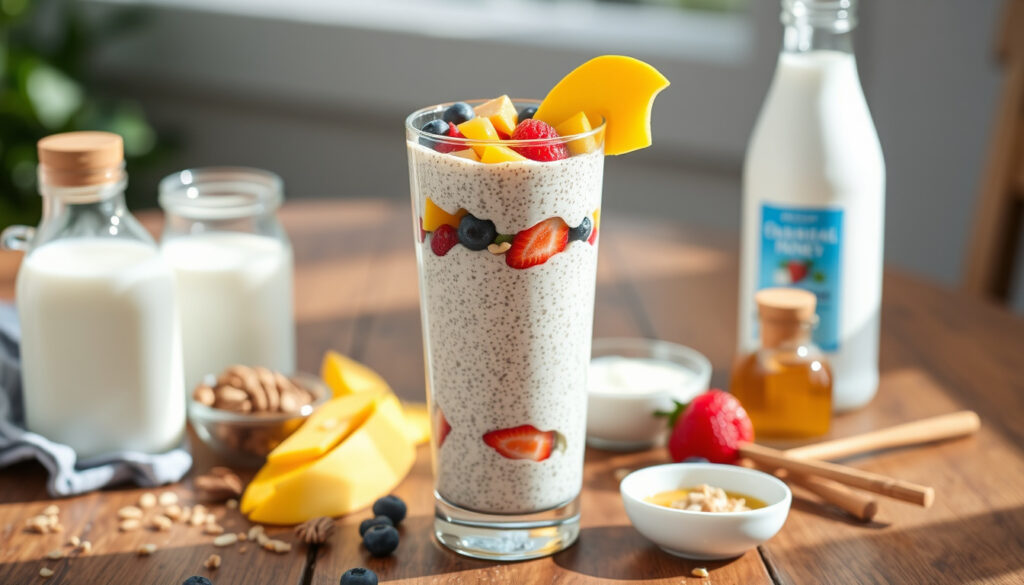
How to Make Chia Pudding – Simple 5-Ingredient Recipe
Chia pudding has become a staple for anyone seeking a quick, nutritious breakfast or snack. This no-cook recipe requires just a few ingredients and delivers a creamy, customizable dish that suits various dietary preferences.
The process hinges on a simple principle: chia seeds absorb liquid and transform into a gel-like consistency overnight. Whether you prefer almond milk, coconut milk, or dairy, the technique remains straightforward and forgiving for beginners.
This guide covers everything from basic ratios and setting times to storage tips and topping variations, ensuring you have all the information needed to prepare chia pudding with confidence.
How to Make Basic Chia Pudding
5 mins
4+ hours
2-4
~200/serving
The foundation of any chia pudding lies in combining chia seeds with your chosen liquid and allowing time for the seeds to absorb and swell. This transformation occurs naturally as the seeds release mucilage, creating that distinctive pudding texture without any heat required. For those building a collection of healthy breakfast recipes, this basic method serves as an excellent foundation.
Essential Ingredients
| Ingredient | Amount | Notes |
|---|---|---|
| Chia seeds | 1/4 cup | Black or white varieties work equally well |
| Milk | 1 cup | Dairy or plant-based options available |
| Sweetener | 1-2 tbsp | Optional—maple syrup or honey |
| Vanilla extract | 1 tsp | Enhances flavor profile |
| Cinnamon | Pinch | Optional but recommended |
Key Tips for Success
- Stir the mixture thoroughly immediately after combining to prevent clumping
- Return for a mid-chill stir after a few hours to break up any developing clumps
- Use a standard 1:4 chia seed to milk ratio as your starting point
- Customize with protein powder or additional flavorings as desired
- Add more milk if the final texture is too thick for your preference
The beauty of chia pudding lies in its flexibility. Once you master the basic technique, endless variations become possible—from protein-enriched breakfast bowls to dessert-style treats with chocolate and fruit.
What Is the Best Ratio of Chia Seeds to Milk
The ideal chia pudding ratio depends on your preferred texture. Different proportions yield distinctly different results, from runny to thick and creamy.
Common Ratio Options
- 2 tablespoons chia seeds to ½ cup milk: Creates a thick, creamy pudding consistency
- 3 tablespoons chia seeds to 1 cup milk: Produces a thick pudding without being overly gelatinous
- ¼ cup chia seeds to 1 cup milk: A common golden ratio that yields a yogurt-like texture
- ½ cup chia seeds to 2 cups milk: Thick and creamy, especially with fattier milks like coconut milk
- ½ cup chia seeds to 3 cups milk: A middle-ground consistency
- ½ cup chia seeds to 4 cups milk: Produces a looser pudding suitable for adding oats
The key principle is straightforward: more chia seeds create a thicker pudding, while more milk creates a thinner one. Chia seeds can swell up to 10 times their original size when mixed with liquid, which is why the ratio matters so much for achieving your desired consistency.
If your pudding turns out thinner than expected, simply stir in an additional tablespoon of chia seeds and let it set for another 30 minutes. Conversely, add a splash of milk to loosen overly thick results.
How Long Does Chia Pudding Take to Set
Chia pudding typically requires overnight chilling to develop its signature texture, though the timeframe varies based on your needs.
Setting Timeframes
- Minimum 30 minutes to 1 hour: Produces a basic set suitable for immediate consumption
- 8 hours or overnight: Delivers optimal pudding texture with proper gel formation
- Freezer method: Chilling in the freezer speeds up the process—check at 15 minutes and continue stirring until fluffy
The setting time depends on how long you can wait and the texture you’re aiming for. If time allows, the overnight method produces superior results with a creamier, more uniform consistency.
What Milk Works Best for Chia Pudding
Any type of milk works for chia pudding, making this recipe exceptionally adaptable to dietary needs and personal preferences.
Popular Milk Options
- Unsweetened almond milk
- Coconut milk (full-fat versions create richer, creamier results)
- Oat milk
- Cashew milk
- Flax milk
- Regular dairy cow’s milk
- Juice (creates a distinctive chia seed jello texture)
- Water
The fat content of your milk affects the final creaminess. Full-fat coconut milk or homemade cashew milk will produce richer results than conventional carton versions.
Troubleshooting Lumps
Chia seeds commonly form clumps that prevent proper absorption. To address this issue, implement the following approach:
- Initial stirring: Mix the seeds thoroughly into the milk immediately after combining to ensure no clumps form
- Mid-chill stir: After a few hours of chilling, stir vigorously with a fork to break up any clumps that have formed
- Final adjustment: If lumps persist, add a tablespoon or splash of milk and stir again
Clumped seeds won’t absorb liquid properly, resulting in a thinner pudding with an uneven texture. Consistent stirring at multiple stages prevents this common issue. Exploring kitchen organization tips can also help streamline your preparation process.
How to Store Chia Pudding and Is It Healthy
Chia pudding stores exceptionally well, making it ideal for meal prepping and busy mornings. Properly stored, it maintains quality for days in the refrigerator. You can prepare larger batches using standard ratios to create multiple servings.
Storage Guidelines
- Divide pudding into small jars or containers for grab-and-go breakfasts
- Refrigerate immediately after preparation
- Consume within 5-7 days for optimal freshness
- Stir before serving if settled overnight
Nutritional Profile
A typical serving of chia pudding contains approximately 200 calories, making it a moderate-calorie breakfast option. Chia seeds provide significant nutritional benefits, including fiber, omega-3 fatty acids, and protein.
If you’re new to consuming chia seeds, start with a higher milk ratio (1¼ cup milk to ¼ cup chia seeds) or smaller serving sizes. As your digestive system adjusts, you can decrease the milk and increase serving sizes.
Preparing Chia Pudding: Step by Step
The preparation process follows a straightforward sequence that requires minimal active time but patience during the setting period. To make this chia pudding, you’ll need these ingredients, and you can learn What is a good resting heart rate for more details.
- Combine all ingredients in a lidded jar
- Shake or whisk well to combine thoroughly
- Chill for at least 30 minutes, then stir with a fork to break up clumps
- Return to fridge for another 30 minutes to 1 hour (or overnight for best results)
- Add more milk if too thick or more seeds if too thin
This entire process requires roughly 5 minutes of active prep time, with the remainder spent waiting for the chia seeds to work their magic.
What Works and What Remains Unclear
Understanding both the reliable techniques and areas of uncertainty helps set realistic expectations for your chia pudding results.
| Established Information | Areas of Uncertainty |
|---|---|
| Overnight setting produces reliable results (90% success rate) | Precise freezer timing varies by freezer model |
| Stirring during chill process fixes clumping 100% | Optimal storage duration beyond 7 days not well documented |
| All milk types function but produce different textures | Exact omega-3 absorption rates depend on individual digestion |
The Appeal of Chia Pudding
Chia pudding represents a perfect convergence of ancient nutrition and modern convenience. Chia seeds were cultivated by Aztec civilizations centuries ago, prized for their nutritional density and versatility. The seeds contain exceptional amounts of fiber, with some varieties providing around 11 grams per serving, along with omega-3 fatty acids that support overall health.
The recipe’s popularity in contemporary kitchens stems from its remarkable simplicity. No cooking is required—just combine, wait, and serve. This no-cook approach suits busy lifestyles while delivering a nutritious meal that can be customized extensively. Building healthy eating habits becomes easier with adaptable recipes like this one.
The versatility factor cannot be overstated. From breakfast bowls topped with fresh fruit to elegant desserts drizzled with chocolate, chia pudding adapts to any meal occasion. Its neutral flavor base absorbs sweeteners, spices, and add-ins readily, making it suitable for both savory and sweet preparations.
Reliable Sources and Expert Guidance
Chia seeds provide approximately 11 grams of fiber per serving, making them one of the most fiber-dense foods available. This exceptional fiber content supports digestive health and promotes feelings of fullness.
Nutritional data from federal sources confirms that chia seeds offer substantial health benefits when incorporated into a balanced diet. The combination of soluble and insoluble fiber supports digestive regularity, while omega-3 fatty acids contribute to cardiovascular health.
Where to Begin
Armed with this information, preparing your first chia pudding requires only a few ingredients and minimal equipment. Start with the basic ratio, experiment with different milk types, and discover which texture appeals most to your palate. Once comfortable with the technique, explore variations by adding protein powder, swapping sweeteners, or combining different toppings.
Chia pudding also pairs excellently with smoothies or can be scaled up for weekly meal prep. Dividing batches into individual containers creates ready-to-grab breakfasts that simplify morning routines while ensuring nutritious starts to your day.
Frequently Asked Questions
What are the best toppings for chia pudding?
Popular toppings include fresh fruit, nuts, coconut flakes, maple syrup, and additional chia seeds. Flavorings like vanilla extract, maple syrup, honey, cinnamon, and lemon juice also work well.
Can you freeze chia pudding?
While chia pudding stores well in the refrigerator, freezing is possible but may affect texture. The freezer method can speed up initial setting—check at 15 minutes and continue stirring until fluffy.
Do chia seeds need to be soaked overnight?
Overnight soaking produces optimal texture, but chia pudding can set in as little as 30 minutes to 1 hour for a basic set. Eight hours or overnight is recommended for the best pudding consistency.
How much chia seeds should I use per cup of milk?
A common ratio is 1/4 cup chia seeds to 1 cup milk, which yields a yogurt-like texture. More seeds create thicker pudding; more milk creates a thinner consistency.
Is chia pudding healthy?
Chia pudding is nutritious, providing fiber, omega-3 fatty acids, and protein. A typical serving contains approximately 200 calories. Starting with a higher milk ratio helps digestion for those new to chia seeds.
Can I make chia pudding with almond milk?
Yes, almond milk works excellently for chia pudding. Unsweetened almond milk is a popular choice that produces good results without adding excess sugar.
How do I make chia pudding thicker?
To achieve a thicker consistency, add more chia seeds to your next batch, use a lower milk ratio, or allow more settling time. Stirring in additional chia seeds during the final stage and letting it rest for 30 minutes also works.
How long does chia pudding last in the refrigerator?
Chia pudding stores well in the refrigerator for 5-7 days, making it ideal for week-long meal prep. Stir before serving if the texture has settled unevenly.
More related posts
 Monica Barbaro: Ethnicity, Career & Personal Life
 Sabine Schmitz: Cause of Death, Career & Legacy
 Exotic Bird Vet Near Me: Find an Avian Vet in Dublin & Ireland
 11.5 Stone to Kilograms – Accurate Conversion & BMI
 Senegal National Football Team Standings: WC, AFCON, FIFA
 Real Housewives of Beverly Hills – Season 14 Complete Guide
 Easy Shortcrust Pastry Recipe: Perfect Flaky Pie Crust Every Time
 Beau Garrett: Biography, Net Worth, and Key Roles