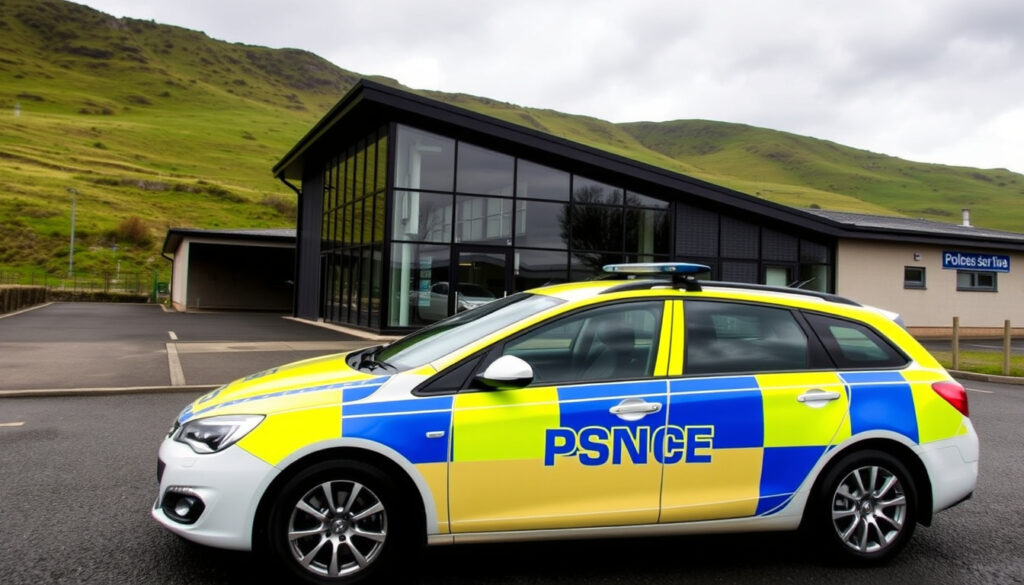
Police Service of Northern Ireland: PSNI Guide & Facts
If you’ve found yourself searching “police service of northern ireland” for a job application or just curiosity, you’re probably looking for concrete facts—not corporate fuzz. This guide cuts through the noise: salaries, qualification requirements, the force’s diversity challenges, and even why some people still call officers “peelers.” Everything here comes from official sources, so you can take the details straight to your next step.
Official Name: Police Service of Northern Ireland (PSNI) ·
Successor To: Royal Ulster Constabulary (RUC) ·
Primary Website: www.psni.police.uk ·
Recruitment Site: www.joinpsni.co.uk ·
Key Concern: Catholic recruit apprehension
Quick snapshot
- PSNI is the official police service name — not “Garda” (Wikipedia)
- Student officer starting salary is £31,163 from 1st September 2025 (Join PSNI Pay Scale)
- Only 0.69% of PSNI officers identify as ethnic minority (agendaNi)
- Exact number of recruits appointed from January 2025 campaign outcomes
- Current religious composition breakdown beyond community background percentages
- Specific barriers deterring ethnic minority applicants beyond general apprehension
- January 2025: First student officer recruitment campaign launched (PSNI Workforce)
- September 2025: New pay scales (£31,163–£50,257) and NITA (£4,283) implemented (PSNI Workforce)
- April 2025: Latest workforce composition data published (PSNI Workforce)
- PSNI aims to achieve workforce representative of Northern Ireland community
- Ongoing recruitment campaigns targeting under-represented groups
- Performance assessment against 2024-2025 representativeness targets
What is the name of the police in Northern Ireland?
The police service in Northern Ireland is officially called the Police Service of Northern Ireland, universally abbreviated as PSNI. This isn’t a rebranding exercise that happened overnight — it carries the weight of a complete institutional transformation.
History and official designation
The PSNI was established in 2001 as the direct successor to the Royal Ulster Constabulary (RUC), following the recommendations of the Patten Commission. The transition represented one of the most significant police reforms in any democratic society, designed to create a service that could earn the trust of the entire community in a region still emerging from conflict.
According to the Wikipedia entry on the PSNI, the official designation as “Police Service of Northern Ireland” was intentionally broader than simply “police force” — reflecting a commitment to community partnership rather than enforcement alone.
“We aim to have a workforce representative of the community we serve.”— PSNI Official Statement
When you visit www.psni.police.uk, you’re accessing the official headquarters portal. The recruitment arm lives at a separate address — www.joinpsni.co.uk — where the actual application process happens.
Distinction from other forces
One common confusion: the PSNI is entirely separate from An Garda Síochána, which serves the Republic of Ireland. They share a border but not a uniform, not a jurisdiction, and not an acronym. If you hear “Garda” in conversation about Northern Ireland, the speaker is either mistaken or referring to the Republic’s force.
UK-wide, PSNI operates alongside Police Scotland, the Metropolitan Police, and regional English and Welsh forces — but it uniquely covers Northern Ireland’s devolved jurisdiction. Its oversight comes from the Northern Ireland Policing Board rather than a UK-wide body.
How much does a police officer make in Northern Ireland?
The salary structure for PSNI student officers appointed after 1st September 2025 starts at £31,163 at pay point 1, rising progressively through the pay scale. The progression reaches £50,257 at pay point 7 — a significant jump that rewards tenure and experience.
Salary ranges
The official pay scale, published on the Join PSNI recruitment portal, shows a clear seven-point structure. New student officers enter at point 1, with incremental increases at each subsequent pay point.
“All Student Officers appointed after 1st September 2025 will enter at point 1 on the salary scale above.”— Join PSNI Pay Scale Page
Nine key figures, one pattern: the PSNI pay scale runs from £31,163 to £50,257 across seven pay points.
| Pay Point | Annual Salary | Status |
|---|---|---|
| Point 1 | £31,163 | Starting salary for student officers post-Sept 2025 |
| Point 2 | Progressive increase | After initial training period |
| Point 3 | Progressive increase | Ongoing development |
| Point 4 | Progressive increase | Established officer |
| Point 5 | Progressive increase | Experienced officer |
| Point 6 | Progressive increase | Senior officer level |
| Point 7 | £50,257 | Maximum scale for student officers |
The Northern Ireland Transitional Allowance (NITA) adds £4,283 to the package from 1st September 2025, making the total starting compensation approximately £35,446 before standard deductions. Recruitment materials on the Join PSNI “Why Join” page advertised positions as “over £35k” for this reason.
Compared to England and Wales, where starting salaries for police constables hover around £31,164 rising to £50,256 after seven years (according to Prospects.ac.uk salary reference), the PSNI scale tracks closely but with the NITA providing Northern Ireland-specific compensation.
“PSNI data highlights the stark disparity between the demographics of Northern Ireland’s general population and the composition of its police force.”— agendaNi analysis
The NITA allowance of £4,283 represents approximately 13.7% of the starting salary — a meaningful supplement designed to address the higher cost of living and specific regional pressures in Northern Ireland. Officers should factor this into total compensation when comparing PSNI roles to other public sector positions.
What qualifications do you need to be a police officer in Northern Ireland?
The qualification bar for joining the PSNI is deliberately accessible. You need five GCSEs (or equivalent) at grades A*-C, including English Language. That’s it for academic requirements — no university degree, no policing diploma, no prior experience necessary.
Eligibility criteria
The Join PSNI FAQ page clarifies that no prior policing qualifications are required. Equivalent qualifications are assessed case by case — for example, a candidate with three A-levels and two Level 2 qualifications meets the GCSE requirement through the equivalency route.
Beyond academics, applicants must be aged 18 or over, be a UK national or have indefinite leave to remain, possess a valid driving licence (or be willing to obtain one), and meet residency requirements. A medical assessment and background security check complete the process.
Application process
Applications run through the dedicated Join PSNI portal. The process follows standard UK policing recruitment: online application, competency-based assessments, fitness testing, medical examination, and reference verification. The January 2025 student officer campaign — the first such dedicated campaign — attracted the highest number of ethnic minority applications to date, according to the PSNI Annual Progress Report 2024-2025.
Female applicants reached 37.5% for some roles in the 2025 recruitment round — a notable improvement on historical patterns. Catholic community background represented 28.8% of applicants, reflecting an ongoing effort to address historical underrepresentation from nationalist communities.
The same PSNI Annual Progress Report 2024-2025 documents that 583 Call Handler applications were received — the highest number to date — indicating broader attraction success beyond police officer roles.
Are Northern Ireland police officers Catholic or Protestant?
This question cuts to the heart of Northern Ireland’s divided history. The PSNI inherited a force that was overwhelmingly Protestant in composition during the Troubles — a imbalance that contributed to community alienation and, ultimately, to the Patten reforms. Today’s PSNI actively tracks community background as a diversity metric, but progress remains uneven.
Religious composition
Rather than Catholic versus Protestant percentages, the PSNI measures “community background” — a term that captures religious affiliation alongside political identity in Northern Ireland’s specific context. The 28.8% Catholic community background representation among 2025 applicants represents movement, but the full composition of serving officers by community background isn’t published in the same way as ethnicity or gender data.
What is published: gender and ethnicity breakdowns. The PSNI Workforce Composition Statistics show 67.51% of police officers are male as of 1st April 2025, and 0.71% ethnic minority among police officers and staff combined. The Northern Ireland population, by comparison, is 8.1% ethnic minority according to agendaNi.
The gap between PSNI’s 0.69% ethnic minority officers and Northern Ireland’s 8.1% population share is stark — and agendaNi’s analysis suggests the PSNI’s race plan remains “short on detail” despite years of diversity initiatives. The 2019 Chief Constable recruitment process notably excluded the two-year service-outside-PSNI criterion specifically to widen the diversity pool, but structural change has been slow.
Recruitment diversity efforts
The NI Policing Board’s 2024-2025 assessment documents PSNI’s performance plan targeting representativeness across gender, community background, ethnic origin, disability, sexual orientation, and socio-economic background.
However, the FOI disclosure on recruitment figures 2020-2025 reveals that appointments were based on available budget rather than specific targets — a policy approach that may have limited the pace of demographic change.
Why are cops called peelers in Northern Ireland?
The nickname “peelers” for police officers traces directly back to Sir Robert Peel’s Police Reform Act 1822, which established the first modern police force in Great Britain. The Metropolitan Police, created in 1829 under Peel’s legislation, became colloquially known as “peelers” in tribute to their founder — and the term migrated wherever British policing took root.
Historical origin
The Greater Manchester Police Museum documents how the term “peeler” became embedded in working-class vernacular. In Ireland specifically, the term arrived with British colonial policing and persisted through the establishment of the Royal Irish Constabulary, the Ulster Special Constabulary, and ultimately the RUC and PSNI.
Term usage today
Today, “peelers” exists alongside standard terms like “coppers” and “the police” in Northern Ireland’s linguistic landscape. It’s less formal than “PSNI officer” but not derogatory — closer to a term of endearment rooted in shared history. The usage varies by community and generation, but the etymology connects modern officers to a policing tradition that predates the Troubles by more than a century.
A term born from British colonial reform now names officers in a force that transformed itself specifically to serve a post-conflict society. “Peelers” bridges two worlds — the imperial policing inheritance and the community-policing aspiration that defines the PSNI’s current mission.
The implication: language evolves with institutional identity, and “peelers” has survived the PSNI’s complete reinvention — suggesting the term carries meaning beyond its colonial origins for many in Northern Ireland.
Related reading: H&M Jobs Ireland: Careers, Applications & Open Roles
nipolicingboard.org.uk, joinpsni.co.uk, psni.police.uk, psni.police.uk, how2become.com, psni.police.uk
PSNI probationers’ high-stakes world comes alive in the BBC drama Blue Lights, a BBC series capturing Belfast’s frontline policing realities.
Frequently asked questions
Are the police in Northern Ireland called Garda?
No. An Garda Síochána is the police service of the Republic of Ireland, operating south of the border. The PSNI covers Northern Ireland and is a completely separate force. Confusing the two is a common mistake among visitors and media, but they share no jurisdiction, structure, or chain of command.
What is Police Service of Northern Ireland uniform?
The PSNI uniform follows standard UK police dress conventions: dark navy shirt and trousers for patrol officers, with black boots, duty belt, and fluorescent vests for visibility operations. Rank is indicated by epaulette insignia. Officers also wear baseball caps and protective body armour as operational requirements dictate.
Where is Police Service of Northern Ireland Headquarters address?
PSNI Headquarters is located at Brooklyn Knock, 65-67 Upper english Street, Belfast BT1 2LT. Additional police stations operate across Northern Ireland’s districts, with significant centres in Derry/Londonderry, Newry, Lisburn, and other population centres.
What are Police Service of Northern Ireland ranks?
The PSNI rank structure follows UK policing conventions: Constable, Sergeant, Inspector, Chief Inspector, Superintendent, Chief Superintendent, Assistant Chief Constable, Deputy Chief Constable, and Chief Constable. Student officers hold a training rank before confirmation as Constables.
What vehicles does Police Service of Northern Ireland use?
The PSNI fleet includes standard patrol vehicles (typically marked and unmarked models from Vauxhall, Ford, and BMW), armoured Land Rovers for public order operations, traffic motorcycles, and specialist vehicles for roads policing, dog units, and air support. The fleet operates from depots across the region.
What is Police Service of Northern Ireland FC?
PSNI FC likely refers to the PSNI Football Club, a internal sports and welfare initiative within the police service. Such clubs are common across UK police forces for officer morale, wellness, and community engagement purposes.
What is Police Service of Northern Ireland C3?
C3 typically refers to Command, Control, and Communications — the operational centre handling emergency and non-emergency calls, dispatch, and coordination. The PSNI’s C3 department manages the 101 non-emergency line and coordinates response to 999 calls.
Related reading
- PSNI Official Workforce Composition Statistics
- Join PSNI Pay Scale and Recruitment Information
- NI Policing Board Annual Assessment 2024-2025
- GOV.UK Police Workforce Diversity Data
- Wikipedia: Police Service of Northern Ireland
More related posts
 Local Funerals This Week: Find Death Notices in Your Area
 The Night Manager Season 1 – Plot, Cast, Episodes and Ending
 Rice to Water Ratio: Perfect Rice for White, Brown & More
 Christian Horner: Career, Marriage, and 2026 Return
 How to Make Chia Pudding – Simple 5-Ingredient Recipe
 Stainless Steel Pan Set – Top Picks for Heat and Durability
 World Snooker Championship 2025 Results: Zhao Xintong Wins
 7 Stages of Dementia Before Death – Progression, Symptoms and Care Guide