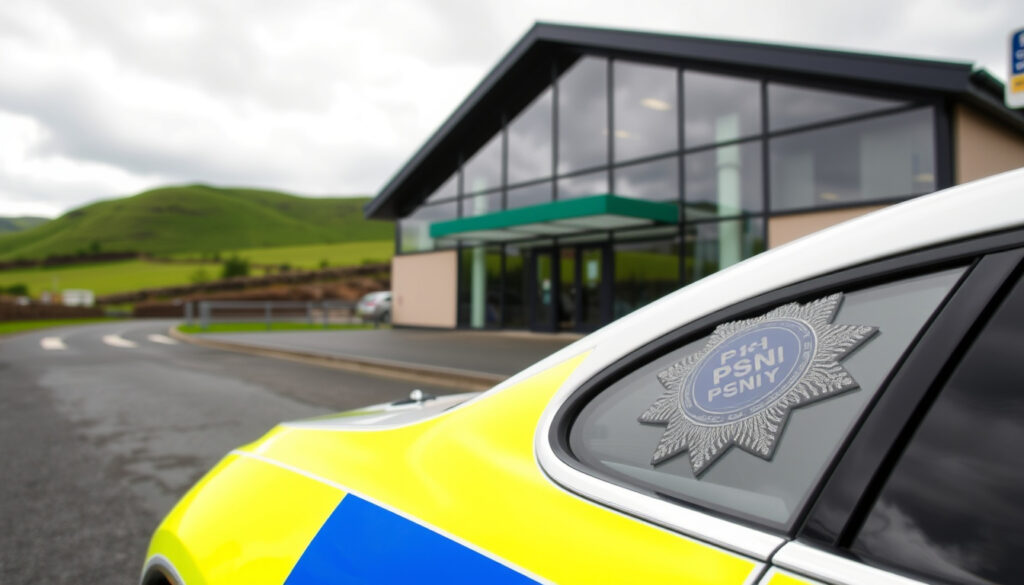
Police Service of Northern Ireland: PSNI Guide & Facts
If you’ve ever found yourself confused about what to call the police in Northern Ireland — or wondered whether a career in blue there might look different from England or Scotland — you’re in the right place. This guide cuts through those confusions with official facts, current salary figures, and clear answers to the questions people keep searching for.
Official name: Police Service of Northern Ireland · Abbreviation: PSNI · Successor to: Royal Ulster Constabulary · Main website: www.psni.police.uk · Recruitment site: www.joinpsni.co.uk
Quick snapshot
- The PSNI is the sole police force for Northern Ireland (Wikipedia PSNI)
- Successor to the Royal Ulster Constabulary, established 2001 (Wikipedia PSNI)
- Current Chief Constable is Jon Boutcher, confirmed 7 November 2023 (Wikipedia PSNI)
- Precise breakdown of officers by religious background in current figures
- Exact 2026 pay scale updates beyond the September 2025 figures already published
- Student Officer pay point 1 set at £31,163 from 1 September 2025 (Join PSNI Official Recruitment)
- NITA allowance rose to £4,283 on same date (Join PSNI Official Recruitment)
- Probationary salary of £26,682 introduced April 2023 (PSNI Pay Review Submission 2023)
- Annual pay review body deliberations expected in 2025–2026
- Ongoing recruitment campaigns targeting community representation gaps
| Field | Value |
|---|---|
| Full name | Police Service of Northern Ireland |
| Common acronym | PSNI |
| Predecessor | Royal Ulster Constabulary |
| Main website | www.psni.police.uk |
| Recruitment site | www.joinpsni.co.uk |
| Total police strength | 6,205 FTE (including 97 Student Officers) |
| Constables | 4,592 FTE |
| Assistant Chief Constables | 4 |
What is the name of the police in Northern Ireland?
The police force for Northern Ireland is formally called the Police Service of Northern Ireland, universally abbreviated to PSNI. This is the only law enforcement body with jurisdiction across all of Northern Ireland’s districts and communities.
Official name and abbreviation
The name Police Service of Northern Ireland was adopted in November 2001 when the Royal Ulster Constabulary was dissolved — a historic transition overseen by the Northern Ireland Policing Board. The PSNI abbreviation appears on uniforms, vehicles, official documents, and across police estate signage throughout the region.
Difference from Royal Ulster Constabulary
The Royal Ulster Constabulary (RUC) served Northern Ireland from 1922 until 2001, undergoing significant reform following the Good Friday Agreement. The PSNI replaced it with a mandate that included structural changes, new recruitment policies, and a different approach to community representation. Officers who served in the RUC were eligible to transfer or continue service in the PSNI under transitional arrangements.
How much does a police officer make in Northern Ireland?
PSNI pay scales are set through annual reviews by the Police Remuneration Review Body (PRRB), with regional supplements that make Northern Ireland policing uniquely compensated compared to other UK forces.
Starting salary details
Student Officers appointed after 1st September 2025 enter at pay point 1 with a salary of £31,163 (Join PSNI Official Recruitment). This rises progressively through seven pay points to a maximum of £50,256 at pay point 7 for confirmed constables. The PSNI notes that Student Officers can start on over £35,000 when appointed and progress through the pay band including allowances and NITA.
Beyond the base salary, the Northern Ireland Transitional Allowance (NITA) adds £4,283 annually from 1st September 2025 — up from £3,666 in September 2022 (Join PSNI Official Recruitment). This allowance is specific to Northern Ireland and reflects the unique operational context of policing in the region.
Salary progression
The progression timeline differs meaningfully from other UK forces. PSNI constables reach the top pay band in seven years, compared to ten years in Scotland. The current figures show a constable starting at £31,164 rising to £50,256 after seven years — a faster advancement curve than England/Wales (£28,551 to £46,044) or Scotland (£30,039 to £46,713) (Prospects.ac.uk UK Police Salary Comparison).
Sergeants earn between £43,000 and £46,000, increasing with service length and responsibility (Police Success Rank Details). Previous police service may place candidates on a higher pay point at the offer stage, providing meaningful credit for prior experience.
What qualifications do you need to be a police officer in Northern Ireland?
The PSNI recruitment process is designed to assess aptitude and suitability for policing rather than requiring specific academic credentials. Understanding the Initial Selection Test and eligibility criteria is essential before applying.
Educational requirements
The PSNI considers Level 3 qualifications as equivalent to A-levels for recruitment purposes, with no preference given to particular subject choices or qualification types (PSNI FOI Disclosure on Education Requirements). This means applicants holding BTEC diplomas, NVQs at Level 3, or other recognised qualifications are treated equally alongside those with traditional A-level results.
Eligibility criteria
All applicants must pass the Initial Selection Test (IST), a timed pre-screening assessment with three sub-tests covering numerical reasoning, verbal reasoning, and situational judgement scenarios (How2Become PSNI Guide). Following the IST, candidates undergo background checks, medical assessment, and fitness testing before receiving an offer.
The PSNI operates a two-year probationary period for Student Officers appointed from April 2023 onwards (PSNI Pay Review Submission 2023). During this period, officers receive a probationary salary of £26,682 (April 2023 rate), progressing to the full constable scale upon successful completion.
You don’t need a university degree to join the PSNI. A Level 3 qualification — whatever the subject — is sufficient. The real competition is in passing the IST and fitness tests, not in academic credentials.
Are Northern Ireland police officers Catholic or Protestant?
This question touches on one of the most sensitive aspects of Northern Ireland’s policing history. The legacy of the Royal Ulster Constabulary — which was overwhelmingly Protestant in composition during the Troubles — created lasting community trust issues that the PSNI has actively worked to address.
Religious composition
Precise current breakdowns of officers by religious background are not consistently published in the PSNI’s public-facing statistics. However, the force has implemented active recruitment policies designed to achieve representative community composition, reflecting Northern Ireland’s mixed Catholic and Protestant population alongside growing minority communities.
Recruitment policies
The PSNI states it is committed to being representative of the community it serves and welcomes all applicants interested in a career in policing (Join PSNI Recruitment Site). The force has developed specific outreach programmes to encourage applications from underrepresented communities, actively tackling historical barriers that affected Catholic recruitment.
The current competitive landscape makes this challenge more acute: the PSNI receives over 7,500 applications yearly with approximately 500 ultimately successful (How2Become PSNI Guide). With such limited intake from a large applicant pool, achieving representative demographics requires proactive community engagement alongside rigorous selection standards.
Northern Ireland’s policing history means community trust isn’t assumed — it has to be built with every recruitment cohort. For applicants from historically underrepresented communities, the PSNI’s outreach commitment is real, but the competition for places remains fierce.
Why are cops called peelers in Northern Ireland?
The nickname “peelers” for police in Northern Ireland has a specific historical origin that many people use without knowing where it came from.
Origin of the nickname
“Peelers” derives from Sir Robert Peel, the British Prime Minister who established the Metropolitan Police in London in 1829. His reforms created the modern police model: a civilian force that replaced military watchmen and parish constables across England and Wales.
Historical context
When police forces were subsequently established in Ireland and later Northern Ireland, they inherited the same institutional lineage from Peel’s Metropolitan Police. The Greater Manchester Police Museum preserves artefacts and records documenting how this nickname spread across Irish and Northern Irish policing contexts, becoming embedded in local vernacular alongside formal service names.
The PSNI itself is not formally called “peelers” in official communications, but the term persists colloquially in some communities — similar to how “bobbies” is used for police in England and Scotland.
What are the PSNI ranks?
The PSNI rank structure follows the British police model but includes unique insignia variations that distinguish it from forces in England, Scotland, and Wales.
At the top sits one Chief Constable, supported by one Deputy Chief Constable and four Assistant Chief Constables who lead different operational areas (PSNI Official Strength Statistics). Below chief officer level, the structure flows through Chief Superintendent (district commanders), Chief Inspector (area commanders), Inspector, Sergeant, and Constable ranks.
A distinctive feature of PSNI insignia is that Sergeants wear chevrons pointing upwards — opposite to the downward-pointing chevrons used by sergeants in other UK forces. Senior ranks in the PSNI display a six-pointed star and saltire instead of the Crown insignia found across English, Welsh, and Scottish constabularies (Wikipedia PSNI). The Sergeant rank represents the first supervisory tier, with operational command responsibilities over constable teams.
The PSNI uses a six-pointed star and saltire (Northern Ireland flag symbols) in its senior insignia rather than the Crown used by other UK forces — a visual distinction rooted in the region’s distinct constitutional position.
Where is PSNI headquarters?
The PSNI headquarters is located at Brooklyn Court, Knock Road, Belfast BT5 6QD. This central command facility houses the senior leadership team, strategic operations, and the Crime Department with its specialised branches including Organised Crime and Economic Crime units.
The force operates across multiple districts, each headed by a Chief Superintendent, with areas subdivided under Chief Inspectors for neighbourhood policing delivery. Police stations remain distributed throughout all counties of Northern Ireland, though the estate has been consolidated since the 2001 reforms.
“PSNI is committed to being representative of the community we serve and welcomes all applicants interested in a career in policing.”
— Join PSNI Recruitment Site
“Start on over £35k when appointed as a Student Officer.”
— Join PSNI Official Recruitment
Related reading: Job applications Ireland
psni.police.uk, policechaplaincy.uk, joiningthepolice.co.uk, joinpsni.co.uk, commons.wikimedia.org
The PSNI’s daily challenges for new recruits are dramatized in the Blue Lights cast list, a gripping BBC series following officers on Belfast streets.
Frequently asked questions
What is PSNI?
The Police Service of Northern Ireland (PSNI) is the sole police force responsible for law enforcement across all of Northern Ireland. Established in November 2001, it replaced the Royal Ulster Constabulary and operates under the oversight of the Northern Ireland Policing Board.
Is PSNI the same as Garda?
No. The PSNI is entirely separate from An Garda Síochána, which is the police force for the Republic of Ireland. They have different jurisdictions, command structures, and legal frameworks. The PSNI operates under UK law while An Garda Síochána operates under Irish law.
What are PSNI ranks?
PSNI ranks run from Constable through Sergeant, Inspector, Chief Inspector, Superintendent, Chief Superintendent, up to Assistant Chief Constable, Deputy Chief Constable, and Chief Constable. Sergeants are distinguished by upward-pointing chevrons, unlike other UK forces.
Where is PSNI headquarters?
PSNI headquarters is at Brooklyn Court, Knock Road, Belfast BT5 6QD. The force is divided into districts commanded by Chief Superintendents, with areas managed by Chief Inspectors.
What vehicles does PSNI use?
The PSNI fleet includes standard patrol cars, armed response vehicles, traffic units, and specialist vehicles for scenes of crime, public order, and police dog units. Specific vehicle procurement details are not routinely published publicly.
What is Police Service of Northern Ireland FC?
Police Service of Northern Ireland FC is a football club associated with the PSNI, competing in amateur and intermediate leagues across Northern Ireland. It is a separate sporting entity from the police service itself.
What does PSNI C3 refer to?
C3 typically refers to Command, Control, and Communications within police operations — the strategic and tactical coordination centre that manages incident response, intelligence gathering, and resource deployment across the force.
More related posts
 11.5 Stone to Kilograms – Accurate Conversion & BMI
 DWP One-Off Support December 2025 – Eligibility Amounts Dates Explained
 Landscape Gardeners Near Me: Roscommon Costs & How to Choose
 Touchland Hand Sanitizer UK: Availability, Prices & Guide
 Size 6 in EU: UK Irish US Shoe & Clothes Chart
 Summer Houses for Sale – UK Prices Sizes Permissions Guide
 Korean War: Causes, Key Facts, and Unresolved Legacy
 Best WiFi in My Area – Guide to Top Local Providers