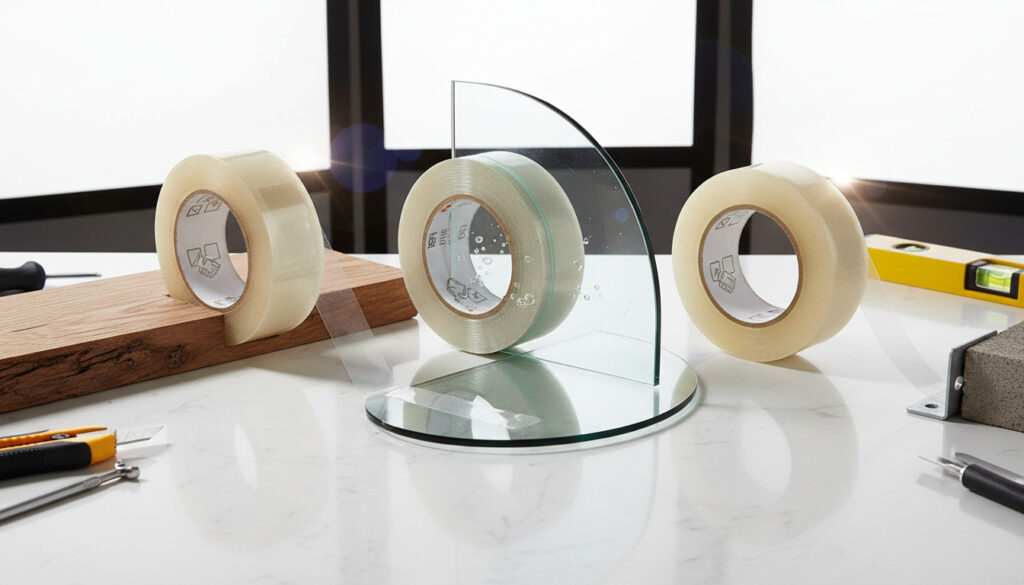
Double Sided Sticky Tape – Best Picks and Application Guide
Double sided sticky tape has evolved from a simple stationery item into an industrial-grade bonding solution capable of replacing rivets, welds, and mechanical fasteners. Modern formulations offer tensile strengths that exceed traditional fastening methods in specific applications, with some variants supporting static loads comparable to mechanical hardware while withstanding temperatures up to 250°F.
Selecting the appropriate adhesive requires understanding material compatibility, weight-bearing requirements, and environmental exposure. The market spans from temporary mounting solutions for rental properties to permanent structural bonds used in automotive and aerospace manufacturing.
What Is the Best Double Sided Tape?
Acrylic foam, cloth-backed, plastic film, and nano-gel formulations serve distinct bonding requirements.
Light duty supports 5–20 pounds; heavy duty industrial grades exceed 38 pounds per application.
Painted drywall, glass, metal, wood, and low-surface-energy plastics each require specific adhesive chemistries.
Permanent structural bonds versus temporary residue-free removal define product selection.
- 3M VHB dominates industrial applications, utilizing closed-cell acrylic foam for viscoelastic properties that fill surface gaps while maintaining bond integrity under dynamic loads. Technical analysis confirms this formulation outperforms competing brands in extreme temperature resistance.
- Gorilla Heavy Duty offers DIY accessibility, supporting up to 38 pounds on rough or smooth surfaces with weatherproof clarity that resists yellowing.
- Weight ratings vary dramatically: Most consumer-grade tapes hold 5–20 pounds per application, while specialized VHB formulations exceed these limits for permanent fixtures.
- Temperature resistance distinguishes professional grades: VHB withstands sustained heat up to 250°F, while competing foam tapes typically rate to 200°F.
- Surface energy compatibility remains critical: Standard tapes fail on low-surface-energy plastics without specialized adhesion promoters.
- Consumer testing identifies clear winners: 2025 product evaluations rank EZlifego and Nano variants highest for removable heavy-duty applications.
| Product | Adhesive Type | Max Weight | Primary Surfaces | Key Feature |
|---|---|---|---|---|
| 3M VHB 5952 | Acrylic foam | Industrial rating | Metal, glass, plastic, wood | 250°F heat resistance |
| Gorilla Heavy Duty | Acrylic | 38 lbs | Smooth/rough | Weatherproof clarity |
| EZlifego | Acrylic gel | Consumer max | Walls, glass | Removable, washable |
| Nano Tape | Acrylic | Medium | Smooth walls | Residue-free removal |
| 3M 38582 Auto | Acrylic foam | High | Car trim, panels | Automotive grade |
| T-REX Strong | Foam | 15–20 lbs | Wood, metal | 200°F resistance |
What Is Double Sided Tape Used For?
Applications range from mounting pictures in rental apartments to bonding ambulance panels and aircraft interiors. The technology serves as a mechanical fastener replacement across construction, automotive, and manufacturing sectors.
Home and Interior Mounting
Residential applications include mounting shelves, mirrors, and artwork without drilling. B&Q Luton – Opening Hours, Address, Phone & Services offers retail access to consumer-grade variants suitable for drywall and painted surfaces.
Automotive and Transportation
3M 38582 Auto Attachment Tape secures trim and body panels on vehicles, while VHB lines trailer seams and bonds glass windows in emergency vehicles. These applications leverage the tape’s ability to absorb vibration and thermal expansion without cracking.
Industrial Manufacturing
Manufacturers utilize VHB to bond dissimilar materials—aluminum to glass, steel to composites—eliminating galvanic corrosion risks associated with mechanical fasteners. Industrial reports document use in trailer assembly and ambulance panel bonding.
Professional installation requires cleaning substrates with isopropyl alcohol to remove oils and particulates. Technical demonstrations confirm that bonded strength increases significantly when surfaces are properly degreased before application.
How Do You Apply Double Sided Tape?
Substrate Preparation
Clean both surfaces with alcohol wipes to eliminate contaminants that prevent adhesion. Porous materials like unfinished wood may require sealing to prevent adhesive absorption that weakens the bond.
Application Technique
Apply firm, even pressure across the tape length immediately after positioning. Application guides recommend rolling a hard cylinder across foam tapes to activate viscoelastic flow into surface irregularities.
Curing and Load Bearing
Acrylic foam formulations achieve handling strength immediately but reach maximum bond strength after 72 hours. Avoid applying load stress during this curing period to prevent adhesive creep or bond line failure.
How Do You Remove Double Sided Tape?
Removable Variants
Nano and EZlifego acrylic gel formulations peel away from painted drywall without residue or surface damage. These suit temporary installations where surface preservation matters more than permanent hold.
Permanent Adhesive Removal
Removing structural VHB or long-cured mounting tape requires mechanical scraping combined with heat application to soften the acrylic adhesive. Removal demonstrations show that dental floss slid behind the tape can sever bonds without damaging substrates.
Permanent tapes may remove paint layers or drywall paper upon extraction. Testing removability on an inconspicuous area prevents costly repairs, particularly on textured or aged paint surfaces.
Applying heat between 150°F and 200°F softens acrylic adhesives without releasing toxic fumes. This temperature range allows mechanical removal while minimizing substrate damage compared to room-temperature peeling.
When Was Double Sided Tape Developed?
- : Early pressure-sensitive acrylic foam tapes enter industrial markets, primarily for automotive trim attachment.
- : 3M formalizes the VHB (Very High Bond) product line, establishing closed-cell acrylic foam as a structural fastening alternative.
- : Expansion into transportation sectors, including railcar and marine applications requiring weatherproof bonding.
- : Consumer-grade heavy-duty variants enter retail channels, bringing industrial technology to DIY markets.
- : Nano-gel and removable acrylic formulations address rental market needs for damage-free mounting.
- : Current formulations optimize for low-surface-energy plastics and extreme temperature cycling.
What Do We Know About Double Sided Tape Performance?
| Established Information | Information That Remains Unclear |
|---|---|
| 3M VHB withstands temperatures to 250°F per manufacturer specifications | Long-term degradation rates in constant UV exposure beyond 10 years |
| Gorilla Heavy Duty supports 38-pound loads on smooth surfaces | Performance on newly painted surfaces with incomplete curing |
| Acrylic foam tapes replace rivets in automotive applications | Exact shear strength comparisons across all temperature ranges |
| Surface preparation with alcohol increases bond reliability | Interaction with low-VOC or eco-friendly paint formulations |
Who Makes the Strongest Double Sided Tape?
3M Corporation dominates the high-performance market through its VHB product line, manufactured using proprietary closed-cell acrylic foam technology. The company’s research facilities have established industry benchmarks for viscoelastic adhesion since the 1980s.
Gorilla Glue Company captures the consumer DIY segment with clear, weatherproof formulations that balance strength with ease of use. Consumer testing organizations consistently rank these brands against newer entrants like EZlifego and XFasten, though 3M maintains leadership in industrial specifications.
Specialty manufacturers produce niche variants including T-REX Strong foam tape for high-heat applications and UHB (Ultra High Bonding) products optimized for rug and picture mounting.
What Do Experts Say About Double Sided Tape?
3M VHB tape is widely regarded as the strongest double-sided tape available, outperforming Gorilla Tape and others in durability, extreme temperature resistance, and bonding dissimilar materials like metal, glass, plastic, wood, and low-surface-energy plastics.
— American Flexible Products
Consumer tests praise VHB for aircraft-grade hold on wood, glass, and metal while noting Gorilla for clarity and resistance to yellowing under UV exposure.
— Product Testing Analysis 2025
Which Double Sided Tape Is Right for Your Project?
Select 3M VHB for permanent structural applications requiring temperature resistance and load-bearing capacity in industrial or automotive environments. Choose Gorilla Heavy Duty for clear, weatherproof indoor-outdoor mounting up to 38 pounds. Reserve removable Nano or EZlifego variants for temporary wall applications where surface preservation takes priority over long-term hold. What Is a Duvet vs Comforter – Key Differences in Warmth and Care represents the type of household decision-making where similar product research methods apply.
Frequently Asked Questions
Where can I buy double sided tape?
Major retailers including Home Depot stock Gorilla and 3M VHB rolls and pads. Specialty adhesive suppliers offer customized thicknesses and widths for industrial quantities.
How long does permanent double sided tape last?
Acrylic foam VHB tapes maintain bond integrity for decades under proper conditions, though exact lifespan varies by temperature exposure and load stress.
Can double sided tape hold heavy mirrors?
Structural-grade VHB supports mirror mounting on properly prepared surfaces, though mechanical safety fasteners remain recommended for glass overhead.
Is double sided tape waterproof?
3M VHB and Gorilla Heavy Duty formulations resist water, humidity, and solvent exposure, making them suitable for outdoor and marine applications.
Will double sided tape damage painted walls?
Removable variants like Nano tape peel cleanly, while permanent acrylic foam may remove paint layers upon extraction. Testing on inconspicuous areas prevents surprises.
Can I use double sided tape on wood?
XFasten and 3M VHB bond effectively to wood, though unfinished porous surfaces may require sealing to prevent adhesive absorption and weakening.
What makes tape stick better to difficult surfaces?
Adhesion promoters and primer wipes chemically alter low-surface-energy plastics, allowing acrylic adhesives to bond to polypropylene and polyethylene that normally resist tape.
More related posts
 7 Stages of Dementia Before Death – Progression, Symptoms and Care Guide
 Best Bottomless Brunch London: Fun, Rooftop & Cheap
 How to Make Chia Pudding – Simple 5-Ingredient Recipe
 Local Funerals This Week: Find Death Notices in Your Area
 Why Can’t I Sleep? Common Causes and How to Get Relief Tonight
 Lucy Briers: Career, Roles in Downton Abbey & Pride and Prejudice
 Korean War: Causes, Key Facts, and Unresolved Legacy