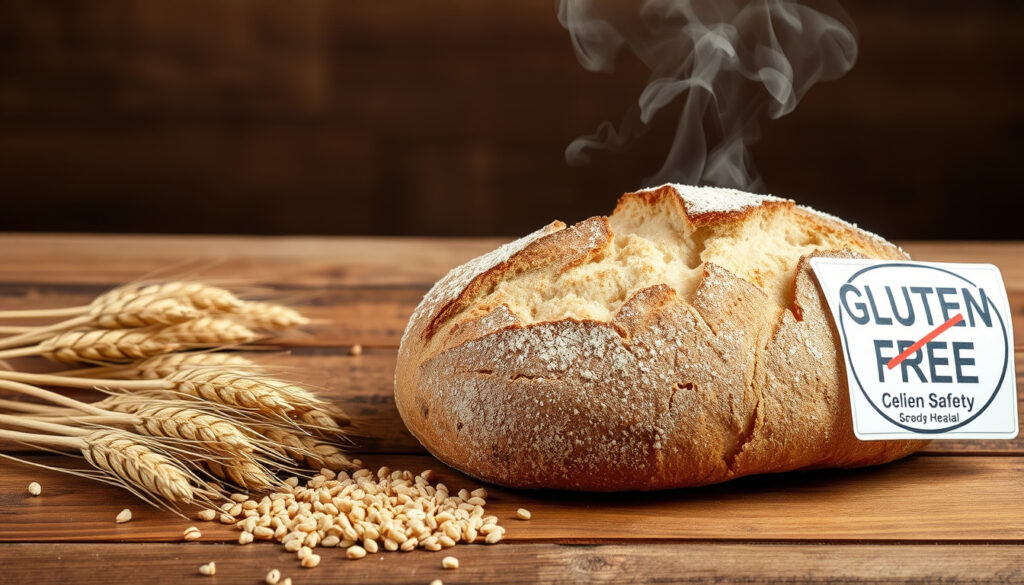
Is Sourdough Gluten Free? Truth for Celiac & Sensitivity
If you’ve seen the crust and crumb of sourdough and wondered whether it might be a safer bet than regular bread, you’re not alone. The fermentation process that gives sourdough its characteristic flavor does break down some gluten—but not enough to clear the legal threshold for “gluten-free” labeling in the United States. Here’s what the science says about sourdough and gluten, and why the answer hinges on whether you’re managing celiac disease or just trying to ease general digestive discomfort.
Gluten in standard loaf: Up to 130,000 ppm · Gluten in sourdough: ~200 ppm · Gluten-free threshold: 20 ppm or less (FDA)
Quick snapshot
- Standard wheat sourdough is not gluten-free (Healthline)
- US gluten-free label requires ≤20 ppm (Beyond Celiac)
- Gluten-Free Watchdog tested three artisanal wheat sourdoughs—all exceeded 20 ppm (Celiac Self-Care)
- Exact ppm variation between brands and home bakes remains undocumented
- Long-term celiac effects from repeated low-gluten sourdough exposure understudied
- 2009 PMC study on sourdough lactobacilli hydrolyzing gluten for celiac patients
- Italian trial published in 2011 with specially prepared sourdough
- Misinformation about wheat sourdough safety for celiac continues to circulate
- Regulatory bodies maintain strict no-sourdough-for-celiac guidance
- Non-celiac gluten sensitivity patients may trial sourdough with caution
The following table compares gluten levels across bread types based on testing data from multiple sources.
| Metric | Value | Source |
|---|---|---|
| US Gluten-Free Threshold | 20 ppm or less | Beyond Celiac |
| Typical Sourdough Gluten Level | ~200 ppm | Lay It Flat |
| Regular Wheat Bread Gluten | Up to 130,000 ppm | Healthline |
| Small Intestine | Primary organ affected by celiac disease | Beyond Celiac |
Is Sourdough Bread Gluten-Free?
No—standard wheat-based sourdough bread is not gluten-free and is not safe for people with celiac disease. The fermentation process used to make sourdough does reduce gluten content by breaking down some of the protein structure during the long ferment, but the final loaf still contains measurable gluten that exceeds the regulatory threshold. In the United States, products labeled “gluten-free” must contain 20 parts per million (ppm) of gluten or less per Beyond Celiac, the authoritative celiac disease organization.
When Gluten-Free Watchdog tested three artisanal wheat sourdoughs, every single one came in above the 20 ppm cutoff. That’s because traditional sourdough fermentation—even over 24 or 48 hours—reduces but does not eliminate gluten. Research from Healthline cites studies showing sourdough at approximately 200 ppm, roughly ten times the legal limit for a gluten-free claim.
For celiacs
The Beyond Celiac organization, which serves as the primary US celiac disease advocacy and information body, states plainly that wheat-based sourdough is not safe for people with celiac disease—even when labeled artisanal, traditional, or slow-fermented. There has long been misinformation online suggesting wheat sourdough is safe for celiac patients, and this is simply not true. Some brands have been found to falsely claim wheat sourdough is safe for celiac, which Beyond Celiac explicitly debunks.
Perhaps most concerning: celiac damage from consuming wheat sourdough can occur even without obvious symptoms. Beyond Celiac notes that asymptomatic celiac patients still sustain intestinal damage when exposed to gluten. This “silent” damage means eating sourdough bread labeled as a “healthier alternative” could be silently harming someone with celiac disease who feels fine.
For gluten sensitivity
Non-celiac gluten sensitivity (NCGS) is a different condition. People with NCGS may experience digestive symptoms when eating gluten but do not have the autoimmune response that defines celiac disease. For this group, the picture is somewhat different. According to Mayo Clinic Connect, the long fermentation process does reduce toxic gluten fragments in ways that may improve tolerance for some NCGS patients.
Dr. Alessio Fasano, a leading celiac researcher, has noted that sourdough may increase tolerance for non-celiac gluten sensitivity. Additionally, sourdough fermentation reduces FODMAP content, which addresses co-occurring irritable bowel syndrome (IBS) that often overlaps with gluten sensitivity. The Healthline analysis of clinical literature notes mixed results—one study found sourdough not better tolerated than regular bread among 26 IBS patients following a gluten-free diet. Still, many NCGS patients report subjective improvement with traditionally fermented sourdough.
Is Sourdough OK for a Gluten-Free Diet?
For someone strictly avoiding gluten due to celiac disease, the answer is no—regular sourdough is not appropriate for a gluten-free diet. Only sourdough specifically manufactured with gluten-free flour and a verified gluten-free starter can carry a gluten-free label. The starter culture itself, if originally started on wheat flour, contains gluten that carries through into the finished bread.
The key distinction is between the fermentation reducing gluten content and fermentation eliminating gluten. Bacterial lactobacilli in sourdough do produce enzymes that hydrolyze gluten proteins, and in a landmark 2009 study published in PMC, researchers demonstrated that selected lactobacilli could break down the 33-mer peptide—the key celiac-triggering fragment in gluten. In that study, 13 of 17 celiac patients showed no inflammatory response when eating sourdough made with these specially selected bacteria. However, this was a highly controlled laboratory-prepared product, not commercial bakery sourdough.
Celiac disease requirements
Celiac disease triggers an autoimmune attack on the small intestine whenever gluten is ingested. Even trace amounts matter over time. The condition requires strict lifelong avoidance of wheat, barley, rye, and cross-contaminated products. The Beyond Celiac guidance is unambiguous: celiac patients should only consume bread products certified gluten-free, which by US law must test at 20 ppm or below.
Gluten sensitivity differences
Non-celiac gluten sensitivity does not produce the same intestinal damage as celiac disease. People with NCGS may have a subjective threshold for tolerance. For these individuals, sourdough’s reduced—but not eliminated—gluten content, combined with lower FODMAP levels, may offer a middle ground that conventional bread does not. However, tolerance varies individually, and no medical recommendation supports sourdough as a safe celiac food.
Sourdough’s reduction of gluten is real, but incomplete. European sourdough is not safer for celiac patients than US versions—the same 20 ppm threshold applies globally, and no regional sourdough tradition produces reliably non-toxic bread for celiacs.
What Bread Has the Least Gluten?
Among conventional breads, sourdough ranks lower in gluten than standard yeast bread because fermentation degrades some gluten proteins. However, both still contain gluten far above the 20 ppm threshold. Truly gluten-free breads—made from rice flour, tapioca starch, almond flour, or other non-gluten grains—are the only options that meet regulatory standards.
Rye bread often appears in lists of lower-gluten options, but it contains significant gluten from rye grain and is not appropriate for celiac patients. Wildgrain notes that rye and sourdough contain less gluten than standard white or whole wheat bread—primarily because the fermentation step in sourdough and the grain type in rye each contribute to some reduction—but neither is gluten-free.
Sourdough position
Sourdough sits in the middle of the gluten spectrum. It has undergone partial gluten degradation through bacterial fermentation, unlike yeast bread which relies on gas production without meaningful gluten modification. Research cited by Healthline indicates that wheat sourdough contains less gluten than regular yeast bread due to the fermentation degrading some gluten. Some sources claim up to 90% reduction compared to traditional white bread, though these figures come from tier-3 sources and may not reflect typical commercial production.
Truly gluten-free options
Certified gluten-free breads—tested to ensure less than 20 ppm—are the only bread products safe for celiac patients. These include brands using dedicated gluten-free facilities that avoid cross-contamination. Sourdough made with certified gluten-free flour (such as rice flour or buckwheat) and started from a genuinely gluten-free culture could theoretically be safe, but such products are rare and require explicit labeling and testing to verify.
The implication: consumers seeking the lowest-gluten bread should look for certified gluten-free labeling rather than relying on sourdough’s partial gluten reduction.
How Much Gluten in Sourdough vs Regular Bread?
The numbers are striking. Standard wheat bread contains gluten levels ranging from roughly 13,000 to 130,000 parts per million depending on the specific product and flour type, according to Healthline analysis. Traditional sourdough made from wheat flour typically tests around 200 ppm per Lay It Flat—a significant reduction in absolute terms, but still ten times the legal threshold.
The fermentation process matters significantly. Longer fermentation times allow more bacterial activity and greater gluten degradation. A 24-hour ferment will produce different results than an 8-hour commercial batch. The Live Pacha analysis notes that longer fermentation correlates with lower gluten levels, though variability makes precise prediction impossible for any given loaf.
Quantified differences
To visualize the gap: if a standard white bread loaf contains 100,000 ppm of gluten, and a typical sourdough tests at 200 ppm, sourdough has reduced gluten by approximately 99.8%. That sounds impressive, but the regulatory ceiling for “gluten-free” is 20 ppm. Sourdough sits ten times above that line.
One exception worth noting: Healthline references a study where specially prepared sourdough with only 8 ppm of gluten was tolerated by 13 celiac patients over a 60-day trial. This demonstrates that with biotech-level control over the fermentation process—using specific lactobacilli strains and extended fermentation—sourdough could theoretically be made safe for celiac patients. But this is not what consumers find at bakeries or grocery stores.
Fermentation impact
The science is clear on mechanism: sourdough bacteria produce proteases that cleave gluten proteins into smaller fragments. The PMC research demonstrated that certain lactobacillus strains hydrolyze the 33-mer peptide—the primary celiac disease trigger—into non-toxic fragments. However, the practical reality is that commercial sourdough production does not achieve complete degradation, and independent testing continues to show most products exceeding the 20 ppm threshold.
The pattern: even a 99.8% reduction in gluten still leaves sourdough well above the safety threshold for celiac patients.
Three of three artisanal sourdough samples tested by Gluten-Free Watchdog exceeded the 20 ppm gluten-free threshold. Artisanal and traditional labels do not guarantee safety for celiac patients—only verified testing does.
What Are the Signs of Gluten Intolerance?
Gluten intolerance exists on a spectrum with distinct conditions. Celiac disease is an autoimmune disorder where gluten triggers an immune response that damages the small intestine. Non-celiac gluten sensitivity produces symptoms similar to celiac but without the autoimmune mechanism or intestinal damage. Recognizing the signs helps people determine whether they need strict avoidance or can potentially tolerate reduced-gluten products like sourdough.
Common symptoms of gluten intolerance include bloating, abdominal pain, diarrhea, constipation, brain fog, headaches, fatigue, and joint pain. For celiac specifically, symptoms may also include weight loss, nutrient deficiencies, iron-deficiency anemia, osteoporosis, and skin rashes. The Beyond Celiac fact sheet confirms that the small intestine is the primary organ affected by celiac disease, and damage can occur silently without obvious symptoms.
Celiac vs non-celiac
The critical difference is mechanism and damage. Celiac disease involves autoantibodies and intestinal villous atrophy visible on biopsy. Non-celiac gluten sensitivity involves neither autoimmune response nor documented intestinal damage in standard testing. A person with NCGS may tolerate trace gluten that would harm someone with celiac disease. This is why sourdough presents a potential middle ground for NCGS patients while remaining unsafe for celiac patients.
Related flare-ups
Gluten exposure in celiac patients triggers both acute symptoms and cumulative intestinal damage. Even asymptomatic celiac patients sustain damage from gluten ingestion, meaning a flare-up may not correlate with obvious symptoms but still causes harm. For celiac patients, the goal is zero exposure. For NCGS patients, individual tolerance thresholds may allow for occasional reduced-gluten products like sourdough—though this remains a personal decision without medical endorsement.
What this means: celiac patients cannot rely on symptom absence to gluten safety, making sourdough an unreliable choice regardless of how it is labeled.
Gluten levels vary substantially across bread types, with implications for different dietary needs.
| Bread Type | Gluten Level | Safe for Celiac? |
|---|---|---|
| Regular wheat bread | Up to 130,000 ppm | No |
| Wheat sourdough | ~200 ppm typical | No |
| Rye bread | High—similar to wheat | No |
| Certified gluten-free bread | Less than 20 ppm | Yes |
| Specialty biotech sourdough | 8 ppm (in controlled study) | Potentially (not commercially available) |
Upsides
- Sourdough fermentation reduces FODMAP content, improving IBS-related symptoms
- Non-celiac gluten sensitivity patients may tolerate sourdough better than conventional bread
- Reduced—not eliminated—gluten may suit those without celiac disease seeking easier digestion
Downsides
- Standard wheat sourdough still contains ~200 ppm gluten—ten times the legal gluten-free threshold
- Celiac patients face risk of silent intestinal damage even without obvious symptoms
- Misinformation leads some celiac patients to incorrectly believe sourdough is safe
- No commercial sourdough has verified testing to confirm <20 ppm levels
The long fermentation process to make sourdough bread the old fashioned way does reduce some of the toxic parts of gluten.
Peter Green, Director, Celiac Disease Center at Columbia University
There has long been misinformation online about wheat-based, sourdough bread being safe for those with celiac disease.
Beyond Celiac (Celiac Disease Organization)
For people with celiac disease, sourdough bread is not a safe choice—regardless of how it’s made or where it comes from. The fermentation process reduces gluten, but not below the 20 ppm threshold that defines gluten-free products in the United States. The risk extends beyond immediate symptoms: even asymptomatic celiac patients sustain intestinal damage from gluten exposure, making sourdough a potentially harmful choice that “feels fine” in the moment but causes silent damage over time. For the NCGS community, sourdough may offer a degree of tolerance that conventional bread does not, though individual responses vary and no broad medical endorsement exists for sourdough as a NCGS solution.
Related reading: How to Make Chia Pudding · Kg to Stone and Lbs Converter
Sourdough’s long fermentation reduces gluten somewhat, but wheat versions exceed safe limits for celiacs, as the process shows in this sourdough bread guide.
Frequently asked questions
Is rye bread gluten-free?
No. Rye bread contains gluten from rye grain and is not safe for celiac patients. Rye is one of the three primary gluten-containing grains alongside wheat and barley.
Is sourdough starter gluten-free?
A sourdough starter made from wheat flour contains gluten and carries that gluten into any bread made from it. Only a starter cultured on certified gluten-free flour would be gluten-free, and even then the final bread requires verification.
Is sourdough dairy-free?
Yes—traditional sourdough contains no dairy ingredients. The basic recipe uses only flour and water. However, always check for added ingredients in flavored or specialty sourdough varieties.
Is sourdough gluten-free bread healthy?
Certified gluten-free sourdough bread can be part of a healthy diet for celiac patients, providing variety and improved taste compared to some standard gluten-free breads. For non-celiac individuals, conventional sourdough offers potential digestive benefits due to fermentation reducing FODMAPs.
What bread is gluten-free?
Any bread labeled gluten-free and tested to contain less than 20 ppm gluten qualifies. This includes breads made from rice flour, tapioca, almond flour, coconut flour, and other non-gluten grains, produced in dedicated gluten-free facilities.
Does celiac get worse with age?
Celiac disease can become more difficult to manage as time passes. Some patients develop additional food sensitivities or refractory celiac disease, where the condition no longer responds to a strict gluten-free diet. Early diagnosis and adherence remain the best strategy.
What are 6 foods celiacs should avoid?
The primary foods to avoid are wheat, barley, rye, and any products made from these grains—including conventional bread, pasta, baked goods, beer, and soy sauce. Cross-contaminated oats and certain medications or supplements may also pose risks.
What bread is highest in gluten?
Standard white bread and whole wheat bread made with conventional yeast contain the highest gluten levels—up to 130,000 ppm. Seitan (wheat gluten) is essentially pure gluten and is the highest-gluten food overall, though it is not traditional bread.
More related posts
 Touchland Hand Sanitizer UK: Availability, Prices & Guide
 How to Get Over Someone – Guide to Healing Heartbreak
 Exotic Bird Vet Near Me: Find an Avian Vet in Dublin & Ireland
 Why Can’t I Sleep? Common Causes and How to Get Relief Tonight
 Ercan Ramadan: Vicky Pattison’s Husband & Entrepreneur
 Co-Amoxiclav Side Effects: Common, Serious & What to Do
 Cast of Paris Has Fallen: 2024 TV Series Actors & Crew
 DWP £450 Payment July 2025: Rumours vs Reality – What to Know