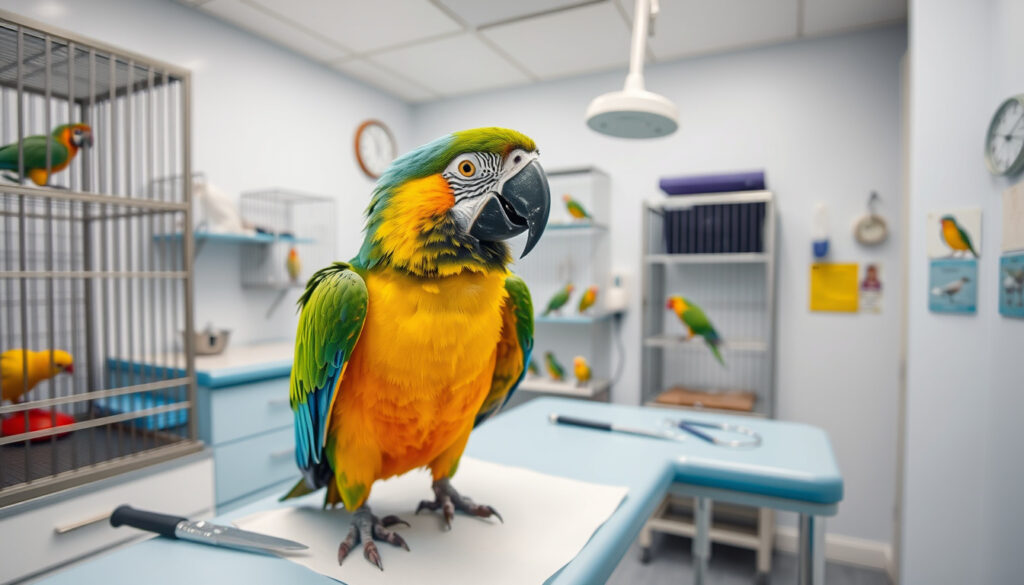
Exotic Bird Vet Near Me: Find an Avian Vet in Dublin & Ireland
If you share your home with a parrot, a budgie, or a canary, you already know they’re not like other pets. They’re intelligent, sensitive, and when they get sick, they hide it well. Finding a vet who truly understands birds in Ireland isn’t as easy as Googling “exotic bird vets near me” — but it’s absolutely possible. This guide lays out exactly where to look, what to ask, and what to expect when your feathered friend needs care.
Animal types treated at Greystones Vet: Parrots, Budgies, Canaries, Tortoises, Turtles, Fish, Rabbits, Guinea pigs, Ferrets, Iguanas, Bearded Dragons ·
Lead exotic vet at Veterinary Specialists: Dr. Bobby Ortiz ·
Appointment availability for new avian vet in Galway: Tuesdays and Thursdays ·
Percentage of vets trained in avian medicine: Less than 5%
Quick snapshot
- Birds hide pain and injury as a survival instinct (Palmerstown Veterinary Hospital)
- Exotic pets are legal in Ireland but Coco’s Law restricts certain species (Palmerstown Veterinary Hospital)
- Regular vets typically do not receive mandatory training in avian medicine (Veterinary Specialists Ireland)
- Average cost of exotic bird vet visit in Ireland (Palmerstown Veterinary Hospital)
- Exact number of certified avian vets in the country (Veterinary Specialists Ireland)
- Coco’s Law implementation details for bird owners (Palmerstown Veterinary Hospital)
- Birds can appear healthy for days while illness progresses; once symptoms show, deterioration can be rapid (Greystones Vets & Florence Road Vets)
- A new avian/exotic vet in Galway now available Tuesdays and Thursdays through Little Hill Animal Rescue (Veterinary Specialists Ireland)
The table below summarises key facts about exotic bird veterinary care in Ireland.
| Number of dedicated avian vets in Dublin metro | At least 3 (Palmerstown, Veterinary Specialists, Nutgrove) |
| Consultation price range (estimated) | €50–€100 (no official data available — estimate from average Irish vet fees) |
| Avian specialist qualifications | Board certification through ABVP (Avian Practice) or RCVS Advanced Practitioner |
| Birds that hide pain | True — birds mask illness as a survival instinct |
How do I find a good avian vet?
Use online directories like the Association of Avian Veterinarians
- The Association of Avian Veterinarians (AAV) maintains a searchable directory of member vets worldwide. This is the most reliable starting point for finding a vet with formal avian training.
- In Ireland however, the AAV directory may list only a handful of practitioners — so it’s worth cross-checking with local resources.
Ask local bird clubs and exotic pet groups
- Facebook groups like “Exotic Pets Ireland” or “Irish Bird Owners” often have firsthand recommendations. Members routinely share experiences with vets across Dublin, Cork, and Galway.
- For example, a post from Little Hill Animal Rescue announced a new avian vet in Galway — information that never appears on a generic directory.
Check for avian-specific certifications and memberships
- Look for board certification from the American Board of Veterinary Practitioners (ABVP) in Avian Practice or the RCVS Advanced Practitioner status. These credentials indicate the vet has passed rigorous exams in avian medicine.
- Without such certification, a vet may not have specialised training — even if they “see birds.”
The implication: relying solely on online searches can miss local expertise; community networks often reveal hidden specialists.
A certified avian vet may be a 2-hour drive away, but a general vet without avian training could miss early signs of disease. For a bird that hides pain, that delay can be life‑threatening.
Can a regular vet treat an exotic pet?
Two types of veterinary practices, one big difference in training and equipment.
| Factor | Regular (general) vet | Exotic/avian vet |
|---|---|---|
| Training in avian medicine | Not mandatory — few vet schools require it | Specialist qualification (ABVP, RCVS Advanced) |
| Equipment (endoscopy, avian blood panels) | Limited or general-purpose | Species‑specific tools and diagnostic tests |
| Recommended for routine check‑ups | Acceptable for healthy birds if no specialist available | Preferred for all birds, especially sick ones |
Differences in training and licensing
- A general veterinary degree does not require compulsory avian rotations. Palmerstown Veterinary Hospital notes that many vets learn on the job — but that’s no guarantee of competence with birds.
- Birds have unique anatomy: no diaphragm, a delicate respiratory system, and very high metabolic rates. Veterinary Specialists Ireland emphasises that advanced training is essential for safe treatment.
Risks of using a general veterinarian for birds
- Birds mask pain — a survival instinct that means subtle symptoms are easy to miss. A general vet may not recognise early respiratory distress or weight loss.
- Without proper avian equipment, even a simple fracture can be mishandled. Greystones Vets & Florence Road Vets advises that birds need species‑appropriate perches, anaesthesia, and surgical tools.
When a regular vet may be acceptable (e.g., emergency)
- In an emergency where no exotic vet is reachable, a general vet can stabilise the bird and provide basic care such as fluid therapy or wound cleaning.
- But Veterinary Specialists Ireland stresses that follow‑up with an avian specialist should always be arranged as soon as possible.
Ireland has fewer than 5% of vets formally trained in avian medicine. For your bird, that means relying on a general vet for anything beyond a routine nail clip carries real risk.
The catch: a general vet can handle emergencies, but for ongoing care the specialist gap is critical.
How to know if a vet is an exotic vet?
Credentials and memberships to look for
- Board certification from the American Board of Veterinary Practitioners (ABVP) in Avian Practice is the gold standard.
- In the UK and Ireland, the RCVS Advanced Practitioner in Zoological Medicine is another strong signal.
- Membership in the Association of Avian Veterinarians indicates active engagement in the field — though not all members are certified.
Questions to ask before booking an appointment
- “What percentage of your patients are birds?” (aim for >30%).
- “Do you have avian‑specific diagnostic equipment (endoscope, blood analyser for birds)?”
- “How often do you treat my species — parrot, budgie, canary?”
- Veterinary Specialists Ireland encourages owners to ask for a tour of the exotic ward; a good facility will have separate climate‑controlled areas for birds.
Red flags (e.g., no avian equipment)
- No separate waiting area for birds and small mammals (birds are stressed by predator smells).
- Use of dog/cat anaesthesia protocols without adjustment for birds.
- Unwillingness to discuss their avian training or referral options.
- Palmerstown Veterinary Hospital states they have treated “every type of small animal” — a phrase that should be backed by species‑specific examples.
What this means: a quick phone screen can separate generalists from genuine specialists.
Are exotic pets allowed in Ireland?
Coco’s law and permit requirements
- Yes, exotic pets are legal in Ireland, but some species require permits under the Wildlife Act and Coco’s Law.
- Palmerstown Veterinary Hospital notes that Coco’s Law (inspired by a seized capuchin monkey) restricts keeping primates and certain dangerous wild animals, but it doesn’t affect common pet bird species.
Banned species and import restrictions
- Birds listed under CITES (Convention on International Trade in Endangered Species) — such as some parrots, macaws, and cockatoos — require CITES permits for import and ownership.
- Always ask the seller or breeder for documentation. Without it, you risk seizure of the bird and legal penalties.
What bird owners need to know about microchipping
- While not yet mandatory for all pet birds in Ireland, microchipping is increasingly recommended. Some vets, like Veterinary Specialists Ireland, offer microchipping for larger parrots as part of a health check.
- Microchipping helps reunite lost birds and may become a legal requirement in future.
Coco’s Law mostly targets primates, not birds — but CITES restrictions affect popular species like African greys. Always verify the legal status of your bird before buying or importing.
What this means: for most bird owners, legal compliance is straightforward; the bigger risk is buying without documentation.
Can you take your bird to the vet?
Preparing your bird for the visit
- Use a secure, ventilated travel carrier — a small cage or a plastic crate with air holes. Greystones Vets & Florence Road Vets advises covering the carrier partially to reduce stress.
- Place a familiar perch or towel inside. Bring fresh food and water, especially for longer trips.
- Keep the car temperature moderate; birds are sensitive to heat and drafts.
What to expect during an avian exam
- The vet will first observe the bird from a distance — checking posture, breathing, and feather condition.
- A full exam typically includes weighing, auscultation (listening to heart and lungs), palpation of the keel bone, and examination of the beak, eyes, and feet.
- Veterinary Specialists Ireland may also perform blood work, faecal analysis, and (if needed) X‑rays or endoscopy.
Signs of illness that warrant a vet visit
- Fluffed feathers, tail bobbing, change in voice, reduced appetite or droppings — these are red flags.
- Greystones Vets & Florence Road Vets notes that birds often hide illness until they can no longer compensate. Any change in behaviour should prompt a check‑up.
- Difficulty breathing, bleeding, or inability to perch are emergencies requiring immediate veterinary attention.
The implication: early intervention is the single most effective way to protect a bird that masks illness.
Pros and cons of taking your bird to a specialised avian vet
Upsides
- Diagnosis and treatment based on avian‑specific training
- Access to species‑appropriate equipment (endoscopy, avian blood panels)
- Staff familiar with handling birds, reducing stress
- Can offer advanced procedures like sexing, microchipping, and feather‑related surgery
Downsides
- Fewer clinics — may require travel (especially outside Dublin)
- Higher consultation fees than general vets
- Longer wait times for appointments at specialist centres
- Less available in emergency out‑of‑hours settings
The pattern: the benefits of specialist care are significant, but accessibility remains a barrier, particularly outside major cities.
Clarity: what we know and what’s uncertain
Confirmed facts
- Birds hide pain and injury as a survival instinct (Palmerstown Veterinary Hospital)
- Exotic pets are legal in Ireland but Coco’s Law restricts certain species (Palmerstown Veterinary Hospital)
- Regular vets typically do not receive mandatory training in avian medicine (Veterinary Specialists Ireland)
- At least three dedicated exotic/avian clinics exist in the Dublin area (Palmerstown, Veterinary Specialists, Nutgrove) (Veterinary Specialists Ireland)
What’s unclear
- Average cost of an exotic bird vet visit in Ireland — no published fee schedules
- Exact number of certified avian vets nationwide — estimates vary
- Detailed implementation of Coco’s Law for bird owners — official guidance is sparse
- Quality differences between clinics — limited independent reviews
What vets and owners say
“We have the best exotic vets in Dublin and have had every type of small animal in our surgery.”
— Palmerstown Veterinary Hospital (Dublin)
“Our exotics department, lead by Dr. Bobby Ortiz, are here to help with both first opinion and referral services.”
— Veterinary Specialists Ireland (Dublin)
“New avian/exotic vet in Galway available Tuesdays and Thursdays — appointments required.”
— Little Hill Animal Rescue (via Facebook)
The pattern across these sources is consistent: dedicated clinics exist, but they’re concentrated in the greater Dublin area. Outside the capital, options are thin — the new Galway service is a welcome addition.
For an Irish bird owner, the reality is that less than 5% of vets have formal avian training. That makes the choice clear: invest the time to find a certified avian vet — even if it means a two‑hour drive — or risk a general practice that may miss early signs of disease. The trade‑off between convenience and expertise is stark, and for a bird that hides pain, the safer decision is the specialist.
For bird owners in Dublin, finding a qualified avian vet in Ireland is essential to ensure your feathered friend receives proper medical care.
Frequently asked questions
How much does an exotic bird vet visit cost in Ireland?
There is no published fee schedule, but based on average Irish veterinary fees, a consultation is estimated between €50 and €100. Labs, X‑rays, and medications are extra.
What qualifications should an avian vet have?
Look for board certification from the ABVP (Avian Practice) or RCVS Advanced Practitioner status. Membership in the Association of Avian Veterinarians is also a positive sign.
Can I take my bird to any local vet?
You can, but a general vet may lack the training and equipment to spot hidden illness. For routine check‑ups it’s acceptable; for any symptoms, find an avian specialist.
What should I bring when taking my bird to the vet?
A secure, ventilated carrier with a familiar perch. Bring fresh food and water, plus any previous medical records or notes on symptoms.
How often should my bird have a check‑up?
At least once a year. Greystones Vets & Florence Road Vets recommend annual health checks for all pet birds.
What are the signs that my bird needs urgent veterinary care?
Fluffed feathers, tail bobbing, difficulty breathing, bleeding, sudden quietness, or inability to perch. Birds hide pain — any change in behaviour is a red flag.
Is there a 24‑hour avian vet in Ireland?
Currently no dedicated 24‑hour exotic animal hospital exists in Ireland. For out‑of‑hours emergencies, contact your regular vet — they may have an on‑call arrangement with a specialist.
More related posts
 Nottingham Forest 2024-25: Salaries, Owner, History & Rivalry
 The Fault in Our Stars – Plot, Characters, True Story Guide
 7 Stages of Dementia Before Death – Progression, Symptoms and Care Guide
 Eid ul-Fitr 2025 Saudi Arabia – Predicted Date Moon Sighting Holidays
 Levi Heron The Glen: The DJ Behind the Viral UK Remix
 CMC Markets Share Price (CMCX.L): Live Chart & Analysis
 Gareth Pierce: Biography, Age, Wife, Children, and Net Worth
 Terminator 2D No Fate – Guide to Defeating Skynet Machines